• Skip to primary navigation
  • Skip to main content
  • Skip to footer
Menu
  • Book a Space
  • Book a Tour
  • Locations
  • Memberships
    • Private Offices
    • Day Passes
    • Conference Rooms
    • Dedicated Desk
    • Coworking
  • Meeting Rooms
    • Austin
    • New York
    • Philadelphia
  • Student Login
  • Book a Tour
  • Book a Space
  • Book a Tour
  • Locations
  • Memberships
    • Private Offices
    • Day Passes
    • Conference Rooms
    • Dedicated Desk
    • Coworking
  • Meeting Rooms
    • Austin
    • New York
    • Philadelphia
  • Student Login
  • Book a Tour
  • Book a Space
  • Book a Tour

admin

Setting Up A Remote Office: 6 Tips For Success

Inside a remote office space

By Bond Collective Staff

Businesses large and small from industries and niches of all types can benefit from setting up a remote office. And, contrary to popular misconception, your business doesn’t have to be on the Fortune 500 list, nor have vast amounts of expendable capital, to make it work.

In this article, we give you step-by-step guidelines for setting up a remote office across town or across the country, like the coworking space in Los Angeles.

If that’s not enough, at the end, we’ll reveal one of the most important steps you can take to save money while at the same time giving your remote team the space, infrastructure, equipment, and professional image they need to succeed.

What Is A Remote Office?

Sun shinning through downtown city buildings

A remote office (also known as a division office, branch office, or satellite office) is a part of your business that is physically separate from the main office.

Most remote offices are in completely different locations (cities or countries), but some can be as close as across the street or even in the same building. It all depends on what your business needs to succeed.

Many remote offices start out as temporary office space in the minds of those making the decisions, but if they choose the right space the first time through, the provisional nature quickly becomes permanent.

Some remote offices even start out as virtual office spaces with nothing more than a mailing address to establish their presence.

Regardless of how it starts, companies large and small are setting up remote offices in different areas, different cities, different regions, or different countries to reap the rewards these new markets have to offer.

How To Set Up A Remote Office For Success

remote office set up with book shelf and art work

1) Plan First

Most smart moves in business start with a solid plan. Setting up a remote office is no different.

Before you do anything else, sit down and examine your business strategy to see if establishing a remote office is in line with both your short-term and long-term goals.

Then, ask yourself, “Why does it feel as though our business needs or could benefit from a remote office?” After answering that question, examine the other side of the coin by asking the question, “Can our business do without a remote office and still succeed?”

The way you answer those two questions will reveal what comes next in the planning phase of this process.

2) Brainstorm The Best Work Environment

Before you engage in setting up a remote office, brainstorm what the ideal work environment would be.

Is the best work environment for your team cubicles and enclosed offices? Or is it an open floor plan with flexible workspace?

Start by brainstorming on your own or with a few other managers. Then, pull your entire team into a meeting — face-to-face or virtual — and give them the opportunity to weigh in on what they think the perfect work environment would be.

You may not be able to satisfy everything your team wants, but, at the very least, you’ll be able to give them what they need to be successful.

Brainstorming about the ideal work environment will give you certain criteria that, in the long run, will then help with the much more difficult task of settling on a remote office space in a different city, coast, or country.

3) Don’t Neglect Design

Design and decor may not seem important during the planning stages of the process, but they can be just as influential as the decision between cubicles and an open floor plan.

The way your remote office looks and feels goes a long way toward inspiring your team to give their all for your business. It also plays a role in how your customers and clients perceive your business.

Design takes many forms, but those most applicable to the remote office environment include such things as:

  • Mobile furniture

  • A variety of seating and standing options

  • Organization

  • Multipurpose workstations

  • Color

  • Material

  • Texture

  • Light

  • Plants

Those variables — and many more — can mean the difference between a productive and an unproductive remote office.

Don’t leave those factors to chance. The professionals at Bond Collective design all of their coworking spaces with your professional image in mind. That means your remote-office team won’t be distracted by their surroundings and lose focus.

4) Make Accessibility A Priority

Downtown busy city street

Accessibility is another key factor to consider when setting up your remote office.

In some locations, the only way to get to the office is by car. In other locations, your employees may have access to public transportation as well.

It all depends on where your remote office is located and how accessible it is to the people who work there.

And this doesn’t just apply to your team. You also have to consider how easy or difficult it will be for your customers and clients to find and reach your office.

During the planning and scouting phase, identify locations with plenty of accessibility options.

5) Invest In The Right Tools

Productivity is no longer solely about the human element. Your team now, more than ever, needs the right tools to get things done and move your business forward.

It goes without saying that your remote office must have internet (as well as even more basic infrastructure such as electricity and water), but your team will also need computers, printers, copiers, whiteboards, and other smart tech to facilitate their workflow.

Without the right tools, your team will struggle to keep up — and keep in contact — with your original location.

That’s bad for productivity, bad for morale, and bad for your bottom line.

6) Give Your Team The Amenities They Need

When it comes to a successful remote office, your team needs more than just good design, accessibility, and the right tools for the job.

While the right desk and plenty of room to spread out and collaborate are essential for your team’s success, amenities affect their performance as well.

Some turnkey remote offices only provide one or two amenities, while others go above and beyond the industry standard in order to give your team exactly what it needs to do their best work all the time.

Top-tier setups (like those in Bond Collective’s coworking spaces) even offer free refreshments to keep your team energized when the going gets tough.

Remote Office Space At Bond Collective

Bond Collective business card in holder

As we discussed in the How To Set Up A Remote Office section, the bulk of the process has to do with location, infrastructure, image, equipment, and workspace.

Why? Because those are the most fundamental aspects of any office environment.

You could waste a great deal of time and money trying to set up those variables for yourself, or you could take the most important step — that mentioned at the beginning of this article — and base your team in a remote office space where everything is done for you.

What is this Shangri-La of which we speak? It’s Bond Collective.

At Bond Collective, you can choose from a variety of remote office options, such as:

  • Open-plan coworking spaces

  • Dedicated desks

  • Private offices

  • Conference rooms for 5-20+ guests

And when you partner with Bond Collective, you don’t just get a beautiful space that fits all your needs. Each and every remote office option also comes with exclusive amenities you can’t find anywhere else.

Whether you rent by the hour, the month, or the year, you’ll get:

  • 24-hour access

  • Custom build-outs

  • Comfortable furnishings

  • Access to small and large conference rooms

  • Networking events

  • Mail service

  • Networking events

  • Curated events

  • Daily on-site cleaning

  • Bike storage

  • Rooftop lounge area

  • Pet-friendly spaces

  • Photo & sound studio (at Gowanus, NY location)

  • Complimentary fresh fruit

  • Complimentary beer, coffee, and tea

  • Private meeting and phone booths

  • Office showers

  • Guest reception and greeting

Whether it’s across the state or across the country, whether it’s for a single individual or a team of several hundred, Bond Collective can get you set up in a matter of days instead of the months it would take to arrange a conventional lease — and at a fraction of the cost.

So, if you’re looking for spacious, well-appointed remote office space that gives you the professional look you need, take advantage of any one of our many Bond Collective locations in the United States, including Los Angeles, New York, Pennsylvania, Washington D.C., Illinois, Tennessee, and Texas.

To get started or to learn more about the advantages of coworking spaces for digital nomads, remote workers, and businesses of all types and sizes, visit BondCollective.com today or call to find out more about everything we have to offer.


Workplace Inclusion: 8 Ways To Build An Inclusive Work Environment

Employees in office having a meeting

By Bond Collective Staff

Many business managers and owners think of workplace inclusion and diversity as one all-inclusive issue. In reality, though, they are two separate concepts that your business needs to address if it wants to achieve success.

In this article, we discuss the difference between workplace inclusion and diversity so that you can focus on each in their proper time. We also discuss the best methods that businesses of all sizes can use to build an inclusive work environment for their team.

What Is Workplace Inclusion?

Two employees on a couch discussing workplace inclusion

Workplace inclusion encompasses the practices and attitudes of a business that ensure all team members:

  • Have equal access to the same resources and opportunities

  • Are treated fairly and respectfully

  • Can (and want to) contribute fully to the team’s and the business’s success

In simpler terms, workplace inclusion stresses the fact that the thoughts, ideas, and perspectives of all individuals matter and that your business considers every point of view before it makes a decision.

It’s also worth noting that workplace inclusion can be an attitude your business strives for, a set of practices you encourage, and an achievement your team enjoys once the attitude and practices are part of your standard operating procedure and company culture.

Regardless of how you use the term, workplace inclusion is all about making sure each member of your team feels valued by their teammates and the business as a whole.

Diversity Vs. Workplace Inclusion

Two employees talking about the differences between diversity and workplace inclusion

As we mentioned at the beginning of this article, many managers and owners lump diversity and workplace inclusion together as one issue.

But the two concepts are, indeed, separate, and businesses would do well to deal with them individually.

Diversity in the workplace refers to assembling a team whose individuals exhibit traits and characteristics that are unique from one another. Workplace inclusion refers to the behaviors, standards, and norms within your business that ensure that every team member feels welcome.

Because they are separate concepts, it is very possible to have one without the other.

For example, you may have assembled a diverse team, but the individuals on that team don’t feel valued or free to speak their mind.

On the other hand, you may have a very homogenous team (lacking in diversity), but the individuals on that team do feel valued and free to speak their mind.

It’s very much like hosting a party, inviting a wide variety of your friends and acquaintances (a diverse group), and then only serving pepperoni pizza.

What about the vegetarians? What about those who are lactose intolerant? What about those who can’t handle gluten? Without offering a variety of choices, your party, though sufficiently diverse, is lacking inclusion.

How To Foster Workplace Inclusion

Man in coworking space

1) Train Your Leaders

One of the first steps in fostering workplace inclusion is training the leaders within your business.

Start with the basics — what inclusion is and why it’s important — and then discuss strategies (perhaps from this list) that your business, your managers, and your teams can use to build inclusion into every corner of your workforce.

2) Organize A Workplace Inclusion Council

A workplace inclusion council is made up of eight or more leaders in upper management who are willing to roll up their sleeves and make time to discuss your business’s inclusion efforts.

When setting the agenda of these discussions, consider such issues as:

  • Business strategy

  • Recruiting

  • Hiring

  • Onboarding

  • Retention

  • Employee engagement

  • Workforce advancement

The best councils are themselves highly diverse so as to incorporate a wide variety of views and opinions.

3) Celebrate Team Members’ Differences

One easy way to promote inclusion at work is to celebrate the differences that make your team unique. Invite everyone to share their background, traditions, and experiences with the other members of the group.

Whether you choose to do so in a group setting or one-on-one, this activity goes a long way toward showing your employees that you respect them as individuals and value the way they think.

4) Listen To What Your Employees Have To Say

Coworkers talking with each other about workplace inclusion

Employees who feel their voice isn’t heard will feel excluded from the decision-making process even if the team is highly diverse.

To avoid this pitfall and promote workplace inclusion in the process, make an effort to listen to what your employees have to say.

There are many ways to do this, the simplest and easiest to incorporate being employee surveys and focus groups that discuss inclusion issues.

Whatever method you choose, approach the activities by thinking about the type of culture you want to create within your business (one that is authentic to your brand) and how you can do so while still meeting the needs of your team.

5) Run Effective Meetings

Meetings where the same person (or a group of people) dominates the conversation are not conducive to workplace inclusion.

You can circumvent this tendency and run more effective meetings by incorporating the following suggestions:

  • Rotate meetings times to accommodate a distributed team

  • Promote active debate

  • Emphasize courteousness and don’t tolerate rude behavior

  • Include remote team members in the meeting

  • Distribute meeting materials well in advance

These suggestions may take some time to perfect, but your business will enjoy a higher sense of workplace inclusion when you get it right.

6) Set Goals And Measure Progress

Inclusion in the work environment is all about getting everyone working toward the same goal. For that reason, it’s imperative to share your business’s goals with your team and measure the effect everyone’s work has on those goals.

It’s also effective to set individual goals for team members and measure the progress each individual makes toward their goal.

7) Examine Workforce Policies

With inclusion in mind, revisit and reexamine the policies that govern all the employees in your business.

Are some of those policies biased toward a specific group? Could you rewrite the policy to be more inclusive while still addressing the principle behind it? Are there any new policies you could write now that inclusion is a priority?

One example of this is how your business deals with holidays. Make sure you give employees the option to take time off (without penalty) for holidays that are not mentioned in the official company calendar.

If you can work it out, can your business give equal priority to all the holidays observed by the members of your team?

8) Discuss Language

Language is a big part of what makes inclusion work. Arrange for a meeting to discuss how your team can use words to convey a more inclusive atmosphere.

For example, can your team use the word “people” instead of “guys” when referring to a mix of males and females?

If you encounter terms that your team needs to avoid, reinforce this behavior by setting up a language jar (or can or bowl or some other container). Whoever uses the taboo word or words has to drop a dollar into the jar.

When the language changes for the better, use the money you’ve collected to treat your team to lunch.

Workplace Inclusion And Your Office Space

Bond Collective’s shared working environment

Workplace inclusion plays an integral role in the way your team interacts with each other and with your customers and clients.

Equally important, though, is the office space in which your diverse and inclusive team operates.

Even the best team you could possibly create will see their productivity decline if they don’t have the right tools and the right work environment in which to use them.

You can ensure that your team has the best office space possible by basing your team or your entire business in a coworking space like those at Bond Collective.

Each and every one of Bond Collective’s shared working environments incorporates inspiring design elements such as natural light, open floor plans, tasteful and professional decor, and multipurpose workspaces to inspire you and your team to greatness.

And at Bond Collective, the benefits don’t stop with the workspace itself. In addition to our unique work settings, members also enjoy amenities like:

  • Unlimited black-and-white printing

  • Daily on-site cleaning

  • Guest reception and greeting

  • Private-label mail service

  • Mothers’ room

  • Lightning-fast Wi-Fi

  • Concession food market

  • Conference Rooms

  • Networking and curated events

  • 24-hour access

  • Bike storage

So, if you’re looking for a way to promote workplace inclusion and improve your team’s happiness and productivity, become a member of Bond Collective.

Visit any one of Bond Collective’s many locations in the United States, including workspaces in California, New York, Pennsylvania, Washington D.C., Illinois, Tennessee, and Texas. Then take advantage of our coworking spaces, dedicated desks, and private offices to suit all your team’s needs.

To get started or to learn more about the advantages of coworking spaces for digital nomads, remote workers, diverse teams, and businesses of all types and sizes, visit BondCollective.com today.

The 24 Best Work Happy Hour Ideas For Companies Of All Sizes

People enjoying a Work Happy Hour

By Bond Collective Staff

If you need a way to bring your team together, build camaraderie, and strengthen work bonds, try holding a work happy hour. Work happy hour gives your team members the opportunity to socialize and connect with their workmates and talk about something other than the big projects and deadlines that are looming.

But what exactly is a work happy hour? And what can you do to make your work happy hour more fun (other than uncorking a bottle of wine, of course)? In this article, the experts at Bond Collective explain this concept and give you 14 of the best ways to take it to the next level.

What Is Work Happy Hour?

Coworkers at a work happy hour

Happy hour is a period of the day (usually from 4-7 p.m.) when bars and restaurants offer their drinks at reduced prices. They may also offer specials on hors-d’oeuvres, appetizers, and other menu items. Happy hour is designed to draw people through the doors and get them to spend money during a typically slow time of the day.

Work happy hour borrows on that concept and repurposes it, not to make money but to give employees a way to build relationships and let off steam after a hard week’s work.

Work happy hour is typically held at 5 p.m. on Friday, although some businesses start earlier or do it on different days (or even every day). Work happy hour is really a way to get coworkers to mingle and get to know one another, but alcohol is pretty much standard as a way to help people relax and unwind.

The simplest form of work happy hour is gathering everyone together to share a drink and talk. However, sometimes that’s not enough to unify your team. You may need a bit of novelty to pull your employees out of their shells.

Here are some ideas to kick your work happy hour up a notch.

24 Simple And Effective Work Happy Hour Ideas

Employees leaving for work happy hour

1) Tap The Energy Of Your Coworking Space

Coworking spaces, like Bond Collective, are a great resource for businesses of all sizes that want to keep their overhead low while still maintaining a professional image. They’re also a great resource for inspiration and creativity — especially during work happy hour.

Instead of restricting your work happy hour to the ten people on your team, open it up to everyone in the office. This gives your employees the opportunity to find a new perspective on work, relationships, and life in general.

2) Add Some Variety

Not everyone likes beer, so add a bit of variety to your work happy hour by offering wine and mixed drinks as well. Remember to also include non-alcoholic beverages for those who may not want to drink alcohol for whatever reason (maybe they’re driving home, are on a restricted diet, or have a family history of alcoholism).

This improves the likelihood that all of your team members will find a beverage they enjoy and no one will feel excluded.

3) Don’t Skimp

Few things squash the buzz of your work happy hour like running out of drinks after only 20 minutes. Plan on two glasses of wine or two bottles of beer per person. If you’re worried those estimates are too low, buy more than you need and save the extra for your next work happy hour.

4) Don’t Forget The Food

People filling their plates from a buffet

After a hard day’s work, your employees need to refuel. That means food as well as drink. Hire a local caterer or have food from a local restaurant delivered for your employees to munch on between drinks.

5) Make It Formal

Drinking and socializing is the purpose of work happy hour, but you can add a new dimension of fun by making it a formal affair.

If you hold your work happy hour on Friday, try dressing up instead of down — make it formal Friday instead of casual Friday. Set a minimum dress code (e.g., skirts and blouses for the ladies, button-down shirts and ties for the gents), but give your employees the freedom to go full formal if they want.

You’re aiming for a high-class affair (like the Met Gala), so fancy party dresses and tuxedos aren’t out of the question.

6) Use Your Outdoor Space

If the weather is fine and you’ve got the outdoor space, use it. Move your work happy hour to the roof or patio. Holding your happy hour in an outdoor space gives your employees the opportunity to breathe in a little fresh air and enjoy the sights and sounds of the city around them.

That can help them relax and unwind just as much as — if not more — than the drinks you serve. You might even consider decorating your outdoor space to liven the mood and transport your employees to another place. If you’re at a loss for ideas, use the next two suggestions as inspiration.

7) Hold A Garden Party

Garden party work happy hour

You may not have access to an outdoor space where you work, but chances are there’s a botanical garden or park pavilion nearby. Why not quit work early and throw a garden party happy hour?

You can even combine several of the suggestions on this list and have your garden party be a formal, catered affair. That would be a nice change for your employees who are probably used to coffee and sandwiches at their desks.

8) Pick A Theme

Woman dressed in 1920s flapper outfite

Everyone loves to play dress-up. Why not tap into that desire for your work happy hour? Instead of just gathering in the conference room for beer and bar snacks, pick a theme for the evening and give your employees the option to dress accordingly.

One of our favorite themes is the 1920s (a la The Great Gatsby). The glitz, the glamor, the flapper dresses — it all makes for an escape from the norm that can quickly become an incredibly enjoyable evening.

9) Step Outside The Familiar

Black and white of people meeting around small tables

Instead of always offering an “open bar” during your work happy hour, consider stepping outside the familiar wine-and-beer mindset and trying a wine tasting or martini bar. If your employees are game, you can really change things up and arrange for a hard alcohol tasting (a.k.a. shots).

10) It’s 5 O’clock Somewhere: Be Flexible With Times

There is no hard and fast rule that says you must hold your work happy hour at 5 p.m. If your work comes to a natural stop at 3:00, 2:00, or even lunchtime, there’s no reason you can’t start happy hour then.

11) Investigate The Neighborhood

Street view of busy city

Your team spent all day in the office (probably all week, too). Work happy hour is a marvelous opportunity to get out and investigate the neighborhood.

Check out a few of the bars in your area or try a new restaurant, coffee shop, or cafe. There’s nothing that says you have to drink. The idea of work happy hour is really all about being together and celebrating the end of the workweek.

12) Plan A Potluck

The next time you hold a work happy hour, arrange for your team members to bring in their favorite meal and beverage to share. Organizing a potluck like this reduces the expense, increases the fun, and gives your employees a chance to try new things.

13) Substitute Coffee And Tea

Yes, happy hour is usually about imbibing a few adult beverages in order to unwind after work, but why not switch things up now and then? Instead of wine and beer, substitute coffee and tea.

Arrange for your favorite coffee shop to deliver various types of coffee, tea, and pastries. You might even hire a barista for the evening to make drinks and serve your employees. Think of it as a coffee and tea tasting.

This is a great way for your employees to discover the new midday pick-me-up that will help them stay focused and on-task. Plus, serving coffee and tea get will get them energized for the rest of the evening.

14) Give Your Employees Something To Talk About

However you choose to structure your work happy hour, and whatever food and drink you choose to serve, start the party off right by giving your employees something to talk about.

Gather everyone together and announce the month’s birthdays. Celebrate successes and milestones. Or read some of the week’s best quotes heard around the office. Keep it short and upbeat, and then let your employees talk about it amongst themselves.

15) Provide Background Music

There’s a reason why bars and restaurants play background music for their guests: it makes it easier to converse with those nearby without feeling as if everyone in the room is listening.

Take a lesson from these businesses that depend on atmosphere for their livelihood when incorporating work happy hour ideas into your schedule.

The most important decision you have to make is not the type of music you play — it’s the volume. You want the music loud enough so that it fills up the space between groups, but not so loud that it interferes with the conversations in those groups.

The right volume for your work happy hour will depend, in large part, on the size of the space, the acoustics, the number of attendees, and the intensity of their conversations (as well as other variables).

You may have to adjust the music numerous times over the course of your happy hour to keep it at the right volume. If you’re going to be busy doing other things, it’s beneficial to hire a DJ to monitor the background music for your gathering.

As for the music itself, we suggest smooth jazz, oldies (as in American Standards), or classic rock. Stay away from heavy metal and rap unless your work happy hour idea includes an appropriate theme.

16) Scatter Conversation Starters

Two employees at work happy hour

A great way to get everyone talking amongst themselves is to scatter conversation starters on all surfaces around the space (even seats).

Simple “table tents” on cardstock work well, but this does take a bit of preparation. For a simpler solution, try printing multiple ideas on a single piece of paper and then cutting the paper into squares or strips.

Ideas include:

  • Share a tweet that made you laugh really hard

  • Recommend a movie

  • Guess where this is (include a map or a Google street view)

  • Show off your most recent photo

  • What emoji do you use the most and why?

  • Share your phone background or lock screen (and why you chose it)

  • Tell a joke

Get creative and tailor the conversation starters to your team, or search online for plenty of generic ideas for conversation starters that will really get everyone talking.

17) Offer Even More Novel Beverage Options

We mentioned substituting coffee and tea in place of alcohol earlier in this article. But for an even more unique twist on work happy hour, offer novel beverage options.

Popular alternatives include:

  • Smoothies

  • Juices

  • Craft sodas

  • Milkshakes

  • Kombucha

Hire a catering company or partner with a local business that specializes in one of those options for a truly distinctive work happy hour that will keep everyone talking long after it’s over.

18) Host A Town Hall

Hosting a town hall is a great work happy hour idea to incorporate into the rotation once in a while.

Bring in the CEO of your business or a panel of managers and allow employees to ask questions and hold informal discussions about the company for 30 minutes or so before switching to some other activity or open conversation.

A good way to control the questions so this doesn’t devolve into arguments and hurt feelings is to ask employees to submit a question or two that they’d like to ask the individual or panel.

You can then arrange for a number of employees to ask their questions in order to drive the discussion forward.

19) Invite A Guest Speaker Or Panel

Guest speaker for work happy hour

In a similar vein, consider inviting a guest speaker or panel to visit your work happy hour to discuss a topic of interest to your employees and your business.

The topic doesn’t even have to be business-related — just something that would be of interest to your team (e.g., government leaders, popular restaurant owners, local “famous” people, etc.).

Allow the guest(s) to speak for 15-20 minutes or so at the beginning of the work happy hour, end with a question-and-answer period, and then give attendees the opportunity to mingle amongst themselves.

20) Arrange For A Learning Experience

Another fun work happy hour idea that everyone will love is to arrange for a hands-on learning experience of some sort.

If you have the facilities, a short cooking class (e.g., how to prepare a quick, healthy lunch) is an ideal way to start the festivities. Other ideas include:

  • How to mix common drinks

  • The art of small talk

  • Book discussion

There are plenty of options for topics that would interest your team, so get creative and tailor the experience so that everyone gets involved and has fun.

21) Help Attendees Wind Down

There’s nothing like a massage to help your team wind down after a hard day’s work.

Most people carry stress in their shoulders and neck, so hiring a masseuse or masseur to give free five-minute shoulder/neck massages is the perfect way to make your happy hour even better.

You can either make it first-come, first-served or put out a sign-up sheet so that everyone gets a turn. Either way, the combination of food, drink, conversation, and a free massage will get everyone’s mind off the pressures of work.

22) Start The Day With A Happy Hour Brunch

For a truly unique idea, try starting the day with a non-alcoholic breakfast or brunch.

End-of-the-day work happy hours are great, but many team members have other obligations to attend to and may not be able to stay. Moving your event to the beginning of the day is a great way to help everyone stay relaxed and productive for the work to come.

Consider hiring a local restaurant to cater the affair and provide pancakes, waffles, eggs, and unique toppings.

During the meal, stimulate conversation by asking attendees to share their favorite topping ideas with others.

23) Get Creative With The Fare

cupcakes for work happy hour

Food is a big part of what makes a work happy hour idea successful. We discussed the basics of this earlier in the article — always include some type of finger food, munchie, or treat — but don’t be afraid to get creative with the fare you offer.

Options that are sure to please include:

  • Sushi

  • Cupcakes

  • Pizza

  • Italian

  • Gourmet hotdogs

  • Falafels

  • Tacos

  • Doughnuts

If these options are beyond your cooking ability, hire a local restaurant or bakery to provide the food so you don’t have to.

24) Start The Work Happy Hour With A Bit Of Comedy

Comedy does wonders to get people to relax and unwind. And that’s exactly what you want for your event.

To kick off the festivities the right way, consider hiring a local comedian to perform a 15- or 20-minute set for all attendees. After that, invite him or her to stick around, get to know your team, and enjoy the drinks and food on hand.

Another option might be to hold an open mic toward the end of your work happy hour to give team members the option to “perform” for and “entertain” their coworkers.

If you choose this option, give your employees plenty of advanced notice so they have time to prepare something for the event.

Listen To Feedback

Regardless of which work happy hour idea you choose, ask for — and listen to — feedback from your employees.

Don’t be afraid to try something new. But if it doesn’t go over well, change it. That’s the only way you’re going to know what works for your team. Because, really, it’s all about what brings your team together and improves the way they work.

Choose The Right Space For Your Work Happy Hour

inside co-working space at Bond Collective

If you really want to make your happy hour a success, choose the right space for the event.

A space that’s too large or too small or doesn’t have the right mix of seating options can hinder your ideas before they even get started.

The best option is to hold your work happy hour in an open, professionally decorated workspace with plenty of sofas, chairs, benches, and tables. This gives attendees easy access to the entire room and sufficient seating and table options for both small- and large-group gatherings.

Where can you find spaces like these?

The coworking spaces at Bond Collective are the perfect solution for all of your work happy hour needs. We provide:

  • Conference rooms

  • Private offices

  • Private meeting rooms

  • Private phone booths

  • Kitchen facilities

  • Bathrooms

  • Guest reception and greeting

  • Expertly-designed interiors

  • Cleaning service

  • Access to other portfolio locations

  • Mothers’ room

  • And other industry-leading amenities

With access to Bond Collective’s spaces and robust infrastructure, your work happy hour will go off without a hitch and bring your team closer than ever before.

For more business advice and to learn about the advantages of coworking spaces for startups, digital nomads, remote workers, and enterprises of all types and sizes, visit Bond Collective’s many locations in the United States, including workspaces in New York, Pennsylvania, Washington D.C., Illinois, Tennessee, and Texas.

Call us today or visit BondCollective.com to find out more about everything we have to offer.

And while you’re at it, schedule a tour to experience first-hand how the boutique work environments at Bond Collective can benefit your business.

Resolving Conflict In The Workplace: 10 Essential Tips

Employees resolving conflict in the workplace

By Bond Collective Staff

As a manager or business owner, it’s important to be prepared to resolve conflict in the workplace. If you aren’t prepared, conflict can quickly become toxic and spread to other members of your team and other parts of your business.

That can lead to decreased productivity and motivation, a breakdown in communication, and disunity within your team.

In this article, we discuss how to prevent conflict in the workplace and how to resolve it if it rears its ugly head.

How To Prevent Conflict In The Workplace

Employee leaving meeting after discussing conflict in the workplace_7.jpg

The best way to prevent conflict in the workplace before it causes problems for your business is to avoid hiring employees that don’t fit into your company culture.

That may seem obvious right now, but during the interview process, it’s all too easy to overlook red flags that may signal future conflict and allow an interviewee’s good qualities to overshadow everything else.

Fortunately, there’s another way you can prevent issues right from the start. Before employees have a chance to disrupt your team’s workflow, implement an onboarding process and continuous on-the-job training.

With effective onboarding, training, and advancement opportunities, you can provide a sense of accomplishment for all of your employees — not just those who incite conflict — that translates into more skills, better preparation, and a happy, engaged team.

For more information on managing a team that is resistant to conflict in the workplace, take a few minutes to read these helpful articles:

  • 3Ps: Properly Managing People, Process, And Product

  • 11 Tips For A Happy And Productive Office Environment

  • The Top 14 Ways To Motivate Employees In 2018

Recognizing The Potential For Conflict

Meeting to discuss conflict in the workplace

Most conflict in the workplace tracks back to one or two individuals who — perhaps without even realizing — contributed to the discord in your office.

Typically, it starts when an employee develops a sense of dissatisfaction with their job. From there, the dissatisfaction can grow and possibly spread until it’s infected your entire team.

If your team’s productivity decreases for no apparent reason or you notice more friction between team members than usual, you may have a dissatisfied employee in your midst.

What’s a manager to do?

In the next two sections, we’ll discuss how to identify a dissatisfied employee through the signs that might lead to conflict in the workplace. We’ll also discuss how to handle the individual who might be the cause without disrupting your entire business.

How To Identify A Dissatisfied Employee

Identifying a dissatisfied employee — and preventing conflict in the workplace from rearing its ugly head — is about reading certain behavioral signs and then taking steps to improve the way an individual works.

The methods we outline below are great by themselves but work even better in tandem to identify dissatisfied employees before they become a problem.

So, rather than relying on one method, incorporate them all for a more accurate picture of your employees’ job satisfaction.

1) Make Note Of A Chronic Bad Attitude

One sure sign of a dissatisfied employee who may eventually foment conflict in the workplace is a chronic bad attitude.

While a bad attitude can take many forms, the main indicators include:

  • Less motivation

  • Decrease in performance quality

  • Lack of participation

  • Resistant to collaborating

  • Verbal outbursts

  • Disrespectful behavior

While it’s true that everyone has a bad day now and then, if you see a consistent upward trend in these behaviors, discuss the issue face-to-face and see if there’s anything you can do to help the employee improve.

2) Track Employee Absences

Inside an empty coworking space

Higher than normal absences are another sign that an employee is dissatisfied with their job and may be on the verge of causing conflict in the workplace.

Yes, there could be extenuating circumstances that necessitate more time off — family issues, illness, conflicts in their schedule, etc. — but if there’s no apparent reason for the absences, the employee could be dealing with some job-related issues that need your attention.

Even before an employee starts taking days off, other signs may indicate that they’re slightly unhappy with the way things are going in their job.

These signs include:

  • Long lunches

  • Excessive breaks

  • Late starts

  • Early departures

Again, one or two instances does not a trend make, but if you see a number of these signs over the course of a month or two, sit down with the employee and find out what’s going on.

3) Consider Negative Feedback From Other Team Members

When a team member is dissatisfied with their job, one of the first indicators is them having a hard time getting along with coworkers. This will usually express itself as negative feedback from others.

If you start to receive negative feedback about a certain employee, it’s important to remember that the problem has already been going on for a while (coworkers aren’t going to give negative feedback immediately).

Therefore, don’t delay. Address the issue as soon as possible so it doesn’t spread any further and decrease the job satisfaction of other team members.

4) Conduct Frequent Performance Reviews

Another early sign that an employee is dissatisfied with their job is a decrease in performance that doesn’t return to “normal” levels.

As with the other signs we’ve discussed, a temporary dip in productivity followed by a return to previous levels is not something to be worried about (unless it happens a lot). But if the quality of an employee’s work goes down and stays there, it’s time to take action.

How are you going to know when this happens? With frequent performance reviews.

Some companies conduct performance reviews once a year. That, however, is not often enough to do any good when it comes to preventing conflict in the workplace.

For a more accurate picture of how everyone on your team is working together, carry out business-wide performance reviews every six months or, better still, every three months.

If this seems like a lot, consider that performance reviews act like a vaccine in that they help keep the body (your team) healthy, improve resistance to infection, and keep everything operating at peak potential.

How To Handle A Dissatisfied Employee

Two employees discussing how to handle conflict in the workplace_3.jpg

Once you’ve identified a dissatisfied employee, here are some solutions to help prevent the bad attitude from causing conflict in the workplace.

1) Keep An Open Line Of Communication

Keep a line of communication open between you and the employee in question so that they feel comfortable coming to you with any problems they’re having.

This is good advice for all of your employees whether they’re dissatisfied or not. When you talk with your team members individually every day, you’ll be in a better position to give them what they need to stay engaged.

You’ll also be in a better position to prevent them from becoming dissatisfied with their job and causing conflict in the workplace with another coworker.

When conflict does develop, it often takes a lot of time, effort, and money to fix. But if you communicate with your employees every day, that little bit of time goes a long way toward keeping your team happy and successful.

2) Be There For Them

Sometimes, all a dissatisfied employee needs is someone to talk to about their problems. They’re not necessarily looking for a solution; they just need to unload.

Encourage them to come talk to you about their problems or arrange for a neutral third party if that makes the employee feel more comfortable.

It may not seem like much, but the simple act of talking things out is sometimes enough to return an employee’s attitude back to what it was before.

3) Show Them You’re On Their Side

The dissatisfied employee often knows that they are dissatisfied — at least on some level — and they may be worried about how these feelings will affect their job.

That insecurity can drive them even further into dissatisfaction and eventually cause conflict in the office.

Once you’ve identified an employee who is suffering on the job, sit them down, tell them you want to help, and show them that you’re on their side.

Expressing your confidence in their abilities — along with the other suggestions in this section — can give the employee the motivation to find joy in their job again.

4) Give Employees The Training They Need

conflict in the workplace_9.png

In many cases, employees begin to feel dissatisfied because they aren’t confident in some aspect of their job or their performance.

To remedy that lack of confidence, provide plenty of training opportunities to help your team develop their skills and improve in their job.

Effective options include:

  • On-the-job training

  • Extracurricular training

  • Virtual training

  • Mentoring

This training also has the added benefit of putting your employees on track for the next way you can handle a dissatisfied employee and prevent conflict in the workplace.

5) Facilitate Career Advancement

For employees of all types, career advancement is a big part of maintaining a sense of job satisfaction. No one wants to feel like their chosen field has become stagnant and all their effort is for naught.

Career advancement — striving for a goal of some sort — provides a sense of accomplishment and “movement” (vs. stagnation) that can work wonders on an employee’s job satisfaction.

That doesn’t mean you give a dissatisfied employee a promotion or a new job title right away. They still need to prove themselves and their skill.

You can, however, challenge them with a new assignment, slightly different responsibilities, or even a supervisory role to help them stretch and grow.

Start Small

If this process of identifying and dealing with a dissatisfied employee is new to your business, don’t feel that you have to implement all the options in the lists above right away.

Start with one or two of the suggestions and see how they work for your team and your business. Once those have become an easy part of your workflow, choose one or two more and practice them until they’re business as usual.

Continue in this manner until you’re able to identify and handle dissatisfied employees before they cause conflict in the workplace.

Sometimes, though, despite your best efforts, conflict does develop between two or more coworkers. When that happens, you’ll need strategies for resolving the issue before it gets any worse.

How To Resolve Conflict In The Workplace

two employees hugging that resolved conflict in the workplace

1) Don’t Delay

Address conflict in the workplace as soon as possible. Putting it off for whatever reason gives the issue a chance to spread into every corner of your business and cause a lot of damage to your team’s unity.

Delaying how and when you deal with conflict also sends the message to your employees that this type of behavior is tolerated. This can have long-term consequences for the way your employees work together.

While you may not be able to resolve the conflict right away, speak to everyone on your team and let them know that what is happening is detrimental to the business and that you are in the process of dealing with the issue.

2) Look For The Cause Of The Conflict

When two or more employees generate conflict in the workplace, it’s not because they’re difficult by nature. If they were, you wouldn’t have hired them.

All too often, an employee acts out because of something going on in their life. It could be that the employee is:

  • Unhappy in their job

  • Frustrated with coworkers

  • Grappling with employee burnout

  • Dealing with personal issues

When you identify the underlying cause of their behavior, you can take steps to help the employees involved and remedy the underlying issue as much as possible.

3) Gather All The Facts

When it comes to resolving conflict in the workplace, avoid relying solely on one person’s perspective.

It’s essential to gather all the facts and investigate all sides of the problem in question. That may mean interviewing other employees — and possibly even customers or clients — to get to the bottom of what happened.

4) Meet With Both Parties In Private

When conflict in the workplace first comes to light, talk with the employees on each side of the issue in private. Never discuss problems in front of other team members.

Invite one employee into your office to discuss their side of the story. Then invite the other employee into your office to discuss their side.

After that, bring both parties together — in private — to try to resolve the problems between them.

Here’s an important consideration: when meeting with the employees (both separately and together), be sure to include a witness — a supervisor, someone from HR, etc. — who can corroborate what you and they say.

5) Keep The Atmosphere Positive

two employees out to lunch

When you meet with employees about a conflict in the workplace, do your best to keep the atmosphere positive.

Try not to convey the message that their job could be on the line if they can’t find a solution to their problems. That only adds to the employees’ stress and could make the situation worse.

6) Express Your Trust

The employees on both sides of conflict need to know that you trust them to get through whatever is causing their disagreement. That’s why it’s essential to tell them this directly.

When your employees feel trusted — both in dealing with their conflict and in their everyday work — they’re more likely to be engaged in doing the best they can.

7) Consider Counseling

Sometimes, all that’s needed to get two team members back on track is to give them the opportunity to talk out their issues in a calm and supportive environment.

To do this, you can meet with the employees yourself or provide access to a professional counselor. Even the simple act of venting their frustration and being heard can have a profound impact on their attitude.

8) Dole Out Discipline If Necessary

Figuring out whether or not discipline is necessary for conflict in the workplace is tricky.

If a clear misconduct was the cause of the issue, you may decide to penalize an employee a day’s wages, suspend them for a time, or reassign them to a different job.

You could also try:

  • Setting up a performance-improvement plan

  • Giving them a mental health day

  • Requiring them to take some type of on-the-job training

Whatever method you choose, make sure the employee discipline is commensurate with the misconduct.

9) Follow Up

After your initial meeting or meetings, follow up with your employees to see how things are going. This serves two purposes:

  • It makes the employees feel like valued members of the team

  • It helps you see if any corrective measures you suggested are working

Now that you’ve addressed the cause of this conflict in the workplace, following up helps you and the employees identify whether further measures are necessary.

10) Communicate Regularly

When it comes to workplace conflict, the old adage, “An ounce of prevention is worth a pound of cure,” certainly applies.

The prevention in question is communication.

When you speak with your employees on a regular basis (sometimes daily), you can give them what they need to stay motivated and productive, thus preventing conflicts from growing divisive in the first place.

Prevent Conflict With The Right Workspace

five employees working in shared office space

Conflict in the workplace can happen anywhere, any time. But you can take steps to prevent it from happening by providing the right workspace for your team.

Work environments have evolved significantly in recent years as more and more entrepreneurs and startups move online and into digital offerings. Despite this change in how and where we work, one thing remains the same: people.

Your employees are the one true constant in your business, so you should give them what they need to do their best work, including:

  • Inspiration

  • The right tools

  • Comfort

  • Flexibility

  • Community

Without these variables, their performance suffers, they feel stressed, and conflict becomes a very real possibility.

How can you provide all of these essentials without locking yourself into a long-term lease — that won’t grow and evolve with your business — and without burning through all of your hard-earned capital?

By basing your team in a coworking space, like Bond Collective.

Bond Collective offers thoughtfully curated boutique work environments that provide an unmatched experience for you and your employees. From unique and inspiring design to comfort and efficiency, Bond Collective has everything covered.

We even offer industry-leading amenities, including:

  • Fast, reliable WiFi and Ethernet connections

  • Unlimited black-and-white printing

  • Mail and package handling

  • Private meeting and phone booths

  • Guest reception and greeting

  • Custom build-outs

  • Daily porter service

  • Nightly office cleaning

Take advantage of all that Bond Collective has to offer to help you work smart and prevent conflict in the workplace.

Visit any one of Bond Collective’s many locations in the United States, including workspaces in New York, Pennsylvania, Washington D.C., Illinois, Tennessee, and Texas. Or call us today to find out more about everything we have to offer.

And while you’re at it, schedule a tour to experience first-hand how the boutique work environments at Bond Collective can benefit your business.

Balancing Act: 5 Tips To Add Calm To Your Office

PG1455086-7D65C9C9-9B8F-4DCF-BD35-1685398D403D.jpg

Wherever your workspace is, we could all use some calm in our daily work routines. Bond is here to help! Our experts in office design and decor are also masters in achieving workspace flow and balance. Here are five tips to help you accomplish your goals in an environment that puts your mind and body first:

1) Organize And Declutter

Not everyone prefers to be neat and tidy, and that’s ok! Life happens and we don’t always have time to get the little things in order. However, if you find that you’re spending your days stressed over lost belongings and letting it get in the way of your goals, it might be a good idea to take a look at what can stay and what can be tucked away. 

Start by finding the things that you use the most or items that make you feel happy, then make sure they’re easily accessible and in plain sight, on your desk. These are items you don’t want to spend more than a second looking for, as that time will add up if you do. 

Anything that you haven’t used in a while can be organized and tucked away into storage- out of sight, out of mind. If you need them, you can easily find them, but they won’t get in between you and your goals for the day. 

2) Find A Dedicated Relaxation Zone

It’s easy when working from home to migrate to the couch when in need of a change of scenery. Tempting as it may be to kick back and relax, make sure you have a dedicated space to completely detach from work. In cities where apartments are tight, make sure you’ve got a comfy chair, cozy nook, or devoted space to unwind. Once we start to muddle work and non-work activities, momentary refuge from business tasks can be difficult to achieve.

3) Introduce Natural Elements

Plants, wood surfaces, stones, or shells help ground us to the earth and keep our mind present. We’re often surrounded by metallic and plastic materials that can feel sterile and cause unnecessary stress.

Try out a small indoor plant, like a Chinese Evergreen or a Snake Plant to add life and promote airflow throughout your space. Adding these plants can boost your morale and promote productivity (and they’re very low maintenance too). Feel free to add meaningful natural items to your desk that you like to look at or hold. You’ll find them to be useful when you need to de-stress!

4) Remember to Stand

Work however you’re most comfortable, but remember the benefits of standing while working. Even if it’s just periodically throughout the day, it can have a huge impact on your day and overall health.

Using a standing desk has been proven to drastically reduce back pain, improve blood flow, blood sugar levels, reduce risk of heart disease, and improve overall mood. There are plenty of fancy standing desks out there, but even a basic stand will do! Just make sure you have it at a comfortable height so you aren’t bending your neck too much when looking at your screen.

5) Meditate

A technique that’s been around for thousands of years has proven time and time again to improve health and overall focus. Find a cozy nook in any one of Bond’s beautifully crafted spaces or a quiet corner in your home where it’s easy to unwind. If it’s a little intimidating at first or you don’t think you have the time, just try it for 5 minutes. It can make all the difference. You’ll return to your desk feeling clear minded, refreshed and ready to own the day.

Remember, all Bond members can download the Calm app at 40% off to help guide their meditations as well!

Incorporating all of these tactics can help fuel your day and make room for what really matters. Visit any one of Bond Collective’s 10 locations and you’ll find many of all of these design elements throughout the common space, along with standing desks available to rent, zen rooms, and plenty of resources to find your own calm at work. Book a tour today to come find your zen at Bond!

Happy Hours in the Days of Social Distancing

PG1455086-3ED04FD9-627B-44E9-BB1D-70C17EE81DD3.jpg


As this period of social distancing stretches on, it’s more important than ever to connect with your friends, family, and colleagues. To make that a reality, happy hour has jumped to the virtual realm. While it may feel like a far cry from an in person happy hour, with a little planning, your happy hour can be a fun wind-down at the end of your day. Bond Collective has you covered with the top tips and tricks for making your virtual happy hour a hit!


Set Up the Invitation

Set a time and date with your friends. Discuss what platforms work best for you all. Google Hangouts and Zoom are both popular options. When sending invites, try to keep the guest list small. Large video calls can be unwieldy! A smaller group means everyone will be able to participate fully and the conversation can be more natural.

Make it an occasion

A virtual happy hour is a great opportunity to get a little dressed up. Shed your sweat pants and opt for something a little more elevated. You can even experiment with themes. Consider hosting a formal happy hour or a costume party and see what your friends come up with! Consider decorating the space around your computer to make it extra festive.

Invite Everyone to Bring a Special Drink

A virtual happy hour is a great excuse to treat yourself. Try sending out a list of easy cocktail recipes for your friends to try or encouraging guests to order “cocktail to go” options that have quickly become popular. 

Play a Game

There are a host of ways to play games online with your friends. Find one that works for you. It’s a great way to break to the ice! Try Jackbox Party Games or Boardgame Arena to find some good options. Some individual board games have virtual versions on their websites. 

Be Ready To Guide the Conversation

Let’s state the obvious – participating in group calls can be awkward! If you’re the host of a virtual happy hour, you can ward off some of the awkwardness by having some questions prepared. Try swapping tips about working from home. Asking what everyone is reading and watching during quarantine is a great way to start things off. Another direction is discussing at-home work routines and new-found favorite recipes. Try directing at least one question at each guest to make sure everyone gets a chance to chime in. Just remember to keep things light and fun! 

Close the Night Out with a Toast

It’s a good idea to cap your happy hour to about an hour before it runs out of steam! Have a closing toast prepared to leave everyone in good spirits. Toast to each other’s health and making it through this together! 

Set Up Your Next Happy Hour!

Now that you’re a virtual happy hour whiz, stay connected by setting up small happy hours with each of your communities. Connect with colleagues one night, friends the next night, and family members another night. 

Take your connections to the next level with Bond Collective

If you’re looking to expand your network, Bond Collective is the place for you! We offer monthly happy hours, Wine Down Wednesdays, and other opportunities for meeting new people. Whether your part of a large team or working solo, there’s always room for new connections, social and professional!

Whether you choose a private office (or suite of offices), a dedicated desk, or a flexible coworking option, all our members have ample opportunities to engage with other professionals and grow their networks. Maybe your next happy hour – virtual or otherwise- will include some new faces!

8 Futuristic Office Ideas For The Modern Workplace

futuristic office at Bond Collective

By Bond Collective Staff

The futuristic office is well on its way to becoming reality.

New technologies and new ways of working have transformed the traditional office space from a drab, uninspiring place to sit and work to a tool that businesses can harness to promote collaboration, focus, growth, and much more.

In this article, we introduce you to innovative technologies that are set to transform the modern workplace yet again and push the futuristic office toward the 22nd century.

Futuristic Office Ideas

Office meeting space

1) Transparent Monitors

Visual clutter is a very real thing that can have a negative — often undetected — effect on the way your team works. One of the major contributors to this visual clutter is the traditional computer monitor.

The futuristic office, though, will eliminate this distraction with the addition of transparent monitors and transparent TVs.

This advanced technology combines liquid crystal displays (LCDs) and transparent organic light-emitting diodes (TOLEDs) to produce a frameless monitor or TV that is almost completely transparent when switched off.

Transparent monitors, like 4K and 8K TVs, are still prohibitively expensive enough that it would be unreasonable to place a unit on every desk in your office.

But as the technology becomes more common and the prices continue to drop, transparent monitors will become a big part of the futuristic office.

2) Floor Plan Light Switch

The futuristic office will be decidedly greener than offices of the past — and we’re not talking about the color. Workspaces built to conserve resources (to be environmentally friendly or “green”) are already a significant office design trend of the last few years.

A big part of that movement is reducing the amount of electricity your office uses throughout the day by turning off lights when the space isn’t being used.

But row after row of light switches can make finding the right balance of on and off more difficult than it should be. The floor plan light switch is the solution to that problem.

Instead of a simple on/off toggle, the floor plan light switch displays a layout of your workspace in its entirety (much like a floor plan or a blueprint).

When you want to activate or deactivate the lights in a certain room or zone, you simply press that area of the switch. No more flipping random switches on or off in search of the one (or ones) that controls the lights in question.

3) Digital Workboards

Employee in a futuristic office working on a digital workboards

Whiteboard technology has been around since the middle of the 20th century and is a big part of the modern office environment. In the 21st century, though, that same concept has gone decidedly digital.

Built-in computer processors have transformed these vertical surfaces into a workboard that functions as both an interactive display and a computer monitor, while still serving as the writing surface that everyone is used to.

In the futuristic office, digital workboards will be perfect for a wide variety of work tasks such as conducting conference calls, taking notes, giving presentations, and conducting brainstorming sessions.

As the technology continues to develop, more and more businesses will find innovative ways to incorporate digital workboards into their everyday activities.

4) Dynamic Glass

The same technology that makes transparent monitors possible is being used to create dynamic glass windows for the futuristic office.

Dynamic glass — also known as smart glass — gives users the ability to change the characteristics of the glass to prevent glare, preserve indoor room temperature, and only allow certain light wavelengths in.

In addition, dynamic glass can take into account specific variables such as cloud cover, sun exposure, light angle, and time of day to provide the best view from inside.

And, as the technology improves, dynamic glass could make it possible for any surface to:

  • Change from window to computer monitor

  • Double as a digital workboard

  • Become opaque from the outside but transparent from the inside

  • Emit light of its own

Dynamic glass is a significant step toward the reality of the futuristic office.

5) A.I. Assistants

The voice assistant is rapidly becoming a staple of life at home thanks to devices such as Siri, Alexa, and Nest. In the futuristic office, that same technology will be available on everyone’s desk.

Your team members can use an artificial intelligence (A.I.) assistant to streamline their workflow and remove the “busy work” that acts as a speed bump to real progress.

Instead of wasting precious time searching for a report or formatting a new document, individuals will be able to command their A.I. assistant to do it for them (“Hey, Siri, search the internet for a report on the beef industry in Iceland.”).

6) One Monitor To Control Them All

A new trend in the office flips the tradition of controlling two monitors with one computer to controlling two computers with one monitor (and one keyboard and mouse).

No more KVM switches, forgetting which computer you’re interacting with, or moving from your desktop’s keyboard and mouse to your laptop controls.

New curved-monitor technology allows for an expansive 43-inch experience (that takes the place of two or more monitors) in which you can drag and drop files between two computers without networking them or resorting to a thumb drive or other external storage solution.

That’s a significant time savings and productivity enhancement for your team and your business.

7) Self-Sterilizing Surfaces

Stop the spread of germs info graphic sign at front of office

Futuristic office designers are even now incorporating self-sterilizing door handles into the modern workplace. Soon, that same technology will be built into other surfaces including tabletops, windows, refrigerator handles, and bathroom fixtures.

Current self-sterilizing door handles use ultraviolet (UV) light to maintain a germ-free surface environment when the handle is not in use.

These types of self-sterilizing surfaces will never completely replace hand washing, but they will provide another layer of protection against the transmission of germs in the modern office.

8) Smart Dumb Things

In the futuristic office, smart dumb things will become more and more common.

This concept uses the interconnectivity of the Internet of Things (IoT) and allows appliances, tools, and furniture to do things they’ve never been able to do before.

Historically isolated technology such as refrigerators, lights, stoves, and cutting boards (yes, this is technology too) are now coming online and working together.

Refrigerators that notify you when the milk is low and cutting boards that display recipe instructions are already a reality. But imagine office lights that you can program with your computer, tablet, or smartphone to dim and change color just as sunlight does.

Or think how much time you’ll save doing inventory if your supply-room shelves notify you when you’re low on toner and printer paper.

That’s how the Internet of Things and smart dumb things are working together to transform the offices of the 20th century into a futuristic office for the 21st and 22nd century.

The Futuristic Office Is Now

futuristic office at Bond Collective

If you want to experience the futuristic office now without the time and expense of building your own from scratch, Bond Collective is the place for you, your team, or your entire business.

First and foremost, the futuristic office revolves around inspiration and engagement even before you add the advanced technology.

At Bond Collective, we incorporate design elements such as natural light, open floor plans, tasteful and professional decor, and multipurpose workspaces in each and every one of our shared work environments.

It’s these variables that are the foundation on which you can build your futuristic office — and it’s all been done for you by the experts at Bond Collective.

But the benefits don’t stop there.

In addition to our modern workspaces, members also enjoy amenities such as:

  • Daily on-site cleaning

  • Guest reception and greeting

  • Private-label mail service

  • Lightning-fast Wi-Fi

  • Concession food market

  • Conference Rooms

  • Black-and-white printing

  • Networking and curated events

  • 24-hour access

  • Bike storage

  • And much more…

If you’re looking for a futuristic office that is sure to increase your team’s engagement and productivity, become a member of Bond Collective.

Visit any one of Bond Collective’s many locations in the United States, including offices in California, New York, Pennsylvania, Washington D.C., Illinois, Tennessee, and Texas.

Tour our gorgeous facilities and experience how Bond Collective’s coworking spaces, dedicated desks, and private offices are the futuristic office made real.

To get started or to learn more about the advantages of coworking spaces for digital nomads, remote workers, and businesses of all types and sizes, visit BondCollective.com today.

5 Essential Desk Items for a Productive Day

PG1455086-65D02E3E-ED11-4D95-B949-47098434FC49.jpg


Whether you are setting up your new work from home space or gearing up to get back into the office, we found these items essential to jump starting your work routine!

1) Speaker

Set the tone by having a speaker at your desk that can also double as a clock. Most digital clocks have bluetooth speakers built into them along with additional outlets. This makes your first item a multidimensional piece by doubling as a clock to a power adapter for all your devices, because we can never have too many! Studies have shown that music not only boosts your mood and productivity but it can also assist with your memory. Listening to calming music before a large meeting can help stabilize your mood and get your mind right. Some of you may even type to the beat! By having a speaker that is also a clock, this can help with time management while at work. 

2) Planner

For the days when having a clock at your desk can just cause you to stare at the minutes going by, that is where our #2 items come in as a weekly or monthly planner. Having either a large desk calendar or a small notebook by your side for your daily and weekly planning is key. When working from home or heading back to the office maintaining your goals and staying focused will be imperative to your success. A monthly planner allows for plenty of room for creative moments or to jot ahead important dates, like your bosses birthday. This planner will help move you forward during your stagnant moments and also allow you to track your daily work place wins.


3) Organizational Unit

Speaking of time management, what better way to cut through the hassle of digging for desk items when we tell you about our #3 necessary pieces, an organizational unit for your office supplies. If you are still working at your kitchen counter and at the end of the day need it to be your chopping board, a unit that holds your papers, pens, and other miscellaneous work items will make for a quick clean up. These pieces allow for your daily items to be readily available saving you time and frustration when searching for that perfect highlighter on your zoom calls. 

4) Trash Can

When you feel like your organizational holder has met its limits, our #4 item is sure to help with this. It is so simple yet so genius to have a trashcan handy in your work space. Having a trash can in or around your work space is a genius way to declutter but also decompress. When you have piles of files on your desk that are from concur three months ago to that pen that JUST ran out of ink, get rid of it. Removing items that are not necessary to be in your work space offers a quick cleanse and reset to your day, plus it’s eco friendly! 

5) Stress Ball

Speaking of decompressing, our last but not least favorite item is having a stress ball handy. Most of us have had to adapt to a work from home lifestyle these past months and unfortunately so have our other housemates. If you are still in the office then we all know that working for yourself or others can be stressful too. By having this simple item at your desk and within an arms reach you can provide yourself with a healthier way of decompression from work throughout the day, looking at you IG scrollers! Stress Balls have been proven to not only reduce stress but they improve nervous system functioning and act as a release of tension in the hands, which in turn improves dexterity.

Armed with these items you will surely be at the top of your game in your office space and maximizing your full potential without breaking the bank!

Virtual Meeting Etiquette: 9 Rules Every Professional Should Follow

Man in virtual meeting

By Bond Collective Staff

If Miss Manners were here, she would be appalled at some of the virtual meeting etiquette that runs rampant on video chat and meeting software these days. Slovenly appearance. Messy background. Video and audio distractions. And other faux pas too numerous to mention.

Don’t be that person who ruins the meeting for everyone else. Exercise virtual meeting etiquette at all times.

In this article, we offer tips to help you display the most professional image possible — whether you’re the host or an attendee — so everyone gets the most out of the virtual meeting.

Woman in window of a coffee shop whose following virtual meeting etiquette

Virtual Meeting Etiquette

1) Behave As You Would In Person

If you were in an in-person meeting, you wouldn’t take a phone call or eat a plate of fajitas while the presenter was talking. You wouldn’t show up without pants or in workout gear, and you wouldn’t bring your pets or your kids.

The gold standard of virtual meeting etiquette is to behave as though you were in an in-person meeting with potential investors or the CEO of your company.

There are several virtual meeting etiquette tips on this list, but if you reread the previous sentence, put yourself in that frame of mind, and then act on it, we’re sure you can come up with more.

2) Keep Track Of Your Mute Status

This one should be obvious, but even as virtual meetings become the order of the day, muting and unmuting at the proper time is still a problem.

If you’re not talking, commenting, or presenting, keep your microphone muted. If it’s your turn to talk, be sure to unmute your microphone first. When you’re finished speaking, mute your microphone again so you don’t cause a distraction for the next person who speaks.

3) Turn Your Video Off If You Need To Get Up

Emergencies do occur — it’s inevitable — and you will have to get up and excuse yourself for a moment from time to time (an unexpected bathroom break immediately comes to mind).

In those cases, virtual meeting etiquette all but demands turning off your video before you get up to deal with the situation.

Then, when you return to the meeting (but before you turn your video on again) be sure that you’re settled back in front of the camera as you were before you left.

Leaving and returning to the meeting this way is much less distracting to the other participants and provides a more seamless transition than walking out of the frame and back into it again with your camera still running.

4) Minimize Distractions

As we mentioned above, unexpected events do occur — there’s no getting around it. But you don’t have to let those interruptions disrupt the meeting.

Exercise the best virtual meeting etiquette by minimizing on-camera and on-microphone distractions whenever possible. Inform people living with you that you’re not to be disturbed during the meeting unless it’s an emergency.

Keep pets and pet noise away from your computer at all times (nothing — and we mean nothing — pulls people’s attention away from the speaker faster than a cute kitty or puppy sticking their head onscreen or walking across the back of the couch).

5) Keep Your Background Clean And Professional

Inside an office space that set up following virtual meeting etiquette

Another useful piece of virtual meeting etiquette that we should all abide by is to keep whatever is behind us clean, clear, and professional.

That means not setting up in a coffee shop with customers coming and going behind you. That means pointing your camera toward a clean, well-decorated (or blank) wall whenever possible.

Yes, a blank wall isn’t always available and your camera will catch other furniture, a closet, a door to another room, and even the floor. In that case, turn your camera on early and take the time to inspect your surroundings to see what everyone else will see.

Close closet doors and doors to other rooms, make your bed (if it’s in the frame), straighten up bookcases, and, by all means, avoid piles of clothes, boxes, and other messes on the floor and flat surfaces where the camera will catch them.

Even if the rest of the room is a complete disaster, clean the area that your camera will see so that your background looks as professional as possible.

6) Dress And Groom Appropriately

When working from home, it’s very easy to roll out of bed five minutes before the meeting, throw on a shirt, finger-comb your hair, and sit down in front of your computer or mobile device.

Avoid this temptation whenever possible because it is definitely not a part of good virtual meeting etiquette. Dress and groom as though you were meeting the CEO of your company or investors who just might fund your operation for the next year.

It doesn’t matter if you’re the host or an attendee, good dress and grooming do matter.

For most people, that will mean wearing clean business clothes — or business casual if that’s your company culture — and styling your hair as if you were reporting to work.

7) Master Virtual Meeting Etiquette With A Good Microphone

Working from home and virtual meetings are here to stay (at least for a while). Do yourself and your distributed team a favor and purchase a good microphone for your phone, tablet, laptop, or desktop computer.

Built-in microphones — be they on laptops, mobile devices, or external webcams — are not of the best quality. Plus, with those options, you’re usually sitting quite a ways away from the mic itself.

Under those circumstances, the microphone may cut out while you’re talking or be just plain hard for other attendees to hear. That said, you don’t have to purchase a studio-quality microphone or the most expensive model.

Even a twenty-dollar desktop or headset mic that plugs into your computer’s headphone jack is leaps and bounds better than the built-in mics that devices come with these days.

8) Silence Phones And Other Noises

Another valuable piece of etiquette advice is to silence phones and other noises that could occur and distract from the proceedings.

You might not think about these noises during your normal day of working at home, but, should they occur while your microphone is on, they can cause others in the meeting to lose focus and forget what you or the speaker said.

Make it a point to silence such things as your:

  • Mobile phone

  • Landline phone

  • TV

  • Radio

  • Computer notifications

  • Clock alarms

When working in common areas of the house or apartment, you may even need to be aware of noise from the dishwasher, washing machine, and doorbell.

It’s not always possible to eliminate all noises, but do your best for the sake of the other attendees in the virtual meeting.

9) Learn The Software Controls

You don’t have to be an expert, but take this virtual meeting etiquette tip to heart and get comfortable with the more common controls of the meeting software.

If keyboard shortcuts are available, those are usually quicker and easier than using the mouse or trackpad, but as long as you know how to do the basic things necessary to participate in a virtual meeting, you’ll be fine.

Those basics include being able to:

  • Join the meeting

  • Change your screen name (if allowed)

  • Mute/unmute your mic

  • Turn your video on and off

  • Raise your hand

  • Leave the meeting

If you’re hosting the virtual meeting, you’ll also need to know how to perform tasks such as sharing your screen and your computer sound (for videos), admitting participants to the meeting, removing participants, setting up breakout rooms, lowering all hands, and muting all mics.

Perfect Your Virtual Meeting Etiquette At Bond Collective

Coworking office space

The best way to perfect your virtual meeting etiquette and convey a professional image at all times is with help from Bond Collective. At Bond Collective, we provide flexible office space to fit any size team, from one to 100 or more.

Whether you’re a digital nomad, a solopreneur, an entrepreneur running a startup, a small business, or a large corporation, we’ve got the workspace that’s perfect for you. You bring your laptop and we’ll do the rest.

And because all our spaces are designed and decorated with an eye to making your business look good, you can rest easy that you’ll convey a professional image whether you’re running a virtual interview, a face-to-face interview, or a virtual meeting with investors.

We can’t help you remember to unmute your mic before talking or dress your best and comb your hair, but we can make everything behind you look like a million bucks.

That’s a big part of perfecting your virtual meeting etiquette.

Visit any one of Bond Collective’s many locations in the United States, including workspaces in New York, Pennsylvania, Washington D.C., Illinois, Tennessee, and Texas. Or call us today to find out more about everything we have to offer.

And while you’re at it, schedule a tour to experience first-hand how the boutique coworking environments at Bond Collective can benefit your business.

Coworking: What Is It And Is It Right For You And Your Team?

Coworkers sitting around tables having a meeting

By Bond Collective Staff

Though the practice is almost 14 years old now, many people still ask us, “What is coworking?”. When they understand the concept and begin to see the benefits, their next question is, “Do you think coworking is right for me or for my business?”.

Regardless of the situation, we can answer yes to this last question — it is right for you and your business — but that doesn’t always convince everyone. They need more than just our word for it.

So, in this article, we’ll answer the question, “What is coworking?”, tell you everything you need to know about the revolutionary concept that is changing the way companies work, and show you why coworking is ideal for your business.

What Is Coworking?

Bond Collective location

Though the word itself has been in use for almost 200 years, coworking as a concept is relatively new to the American workforce.

An intrepid entrepreneur introduced the modern iteration of coworking space in San Francisco back in 2005. And like most revolutions, it went unused for the first few months it was open. But as people came to see what coworking was all about, the concept gained traction and quickly spread to parts far and wide.

As of this writing, there are coworking spaces in Bali, Nicaragua, Egypt, the UK, Hong Kong, Vietnam, South Africa, India, Mexico, and everywhere in-between. It truly is a worldwide phenomenon.

While not all dictionaries contain a definition that tells you what is coworking yet, there is a general consensus amongst those in the know. Here’s the official un-official definition of coworking:

The use of an office space or other working environment by people who are self-employed or working for different employers, typically so as to share equipment, ideas, and knowledge.

Coworking spaces go by several different names, including:

  • Collective workspace

  • Collaborative workspace

  • Shared workspace

  • Temporary workspace

Some even refer to it as a virtual office.

Within each coworking space, you’ll find community spaces, hot desks (available on a first-come, first-served basis), dedicated desks (i.e., reserved), private offices, conference and meeting rooms, private phone booths, and much more.

Whatever your workspace needs, you’ll find it in a coworking environment.

Who Uses Coworking Space?

Freelancers And Digital Nomads

Working on your couch or at your kitchen table, in a hostel room, or in a busy cafe can be isolating, uninspiring, distracting, and difficult. That’s why many freelancers and digital nomads use a coworking space as their office.

There, they can work, network, socialize, brainstorm with others, and enjoy the perks of an office environment without the expense of building their own.

Startups

open reception area with green and white marbling

Ask any entrepreneur or startup, “What is coworking?” and they’ll be happy to sing its praises and tell you how it helped them grow their business.

That’s because coworking spaces keep overhead costs low at a time when that money is desperately needed for research, development, and marketing.

Small Businesses

Small businesses often use coworking spaces because of their centralized location with easy access to transportation, dining, shopping, and other amenities. And certain coworking spaces — like those at Bond Collective — are the epitome of luxury, class, and professionalism.

Most small businesses wouldn’t be able to afford on their own what they can get for a low monthly fee in a coworking space.

Small, Medium, And Large Enterprises

Enterprises and corporations of all sizes are using coworking space to their advantage.

While many of these businesses have their own space, they use the luxury and modern conveniences of coworking space to entertain clients, expand their teams, establish offices in new locations, and help their employees stay motivated.

What Are The Benefits Of Coworking?

1) Low Overhead

contemporary conference area with large table and leather chairs

Overhead — recurring costs that sustain your business but don’t contribute to income — is one of the largest expenses most businesses contend with. But with a coworking space, everything is taken care of.

You and your team can walk in, do the work, and leave — without having to worry about who’s going to fix the copier, clean the kitchen, or restock the snack bar.

2) Infrastructure

Infrastructure is all those disparate elements that make work easier but aren’t obvious at first glance. Things like the internet, technical support, heating and cooling, cleaning, storage, and supplies. Without those bits and pieces, work comes to a screeching halt.

But in a coworking space, like those at Bond Collective, infrastructure details are handled for you. That allows you to focus on the work at hand, not the day-to-day operation of your office.

3) Comfort

Comfort may not seem like an essential consideration for an office space, but it can mean the difference between a focused, engaged employee and a distracted, unproductive employee.

In a coworking space like any one of Bond Collective’s six locations, comfort is built in. We decorate and appoint all of our environments with the finest that luxury and technology has to offer.

4) Professional Image

With a coworking space, you get a professional image from day one without having to suffer through the stress, strain, and expense of doing it yourself.

For example, at Bond Collective, all members benefit from guest reception and greeting, mail service, 24/7 access to multiple locations, beautiful decor, and luxurious accommodations.

5) Flexibility

When we answer the question, “What is coworking?” one of the main benefits for any business, large or small, is flexibility. Coworking spaces give you the agility to expand or contract the amount of space you use (and what you pay for that space) on a month-by-month basis.

So, you can start with a hot desk for one in September, upsize to a private office for five in November, and downsize to dedicated desks for three in January. You can’t do that with a conventional lease.

And this is just the tip of the benefits iceberg.

Businesses and employees alike enjoy the collaborative atmosphere of coworking spaces. They find value in the inspiration, community, and networking that happens naturally when people from varied and diverse industries come together.

6) Open Office

People working in coworking space

Want to transition away from the isolation that cubicles cause? Opt instead for the open office floor plan that a good coworking space provides.

An open office is one that accommodates all your team members — and sometimes other business’s team members as well — along with all furniture and equipment in a single large open room or rooms.

How does that work in practice for multiple businesses working together in the same coworking space?

Departments, divisions, and teams usually cluster in different parts of the space, but there are very few (if any) dividing walls.

Instead, demarcations take the form of counter- or desk-height cabinets, shelves, and plants of all shapes and sizes.

In addition, most coworking spaces include areas for quiet concentration, regular work, socialization, and group meetings. This helps allay some of the common drawbacks inherent in the open office plan.

Open office floor plans offer improved communication, a pleasing aesthetic, centralization, and a sense of democracy that can’t be found in any other office layout.

Those same open office floor plans also suffer from high noise levels, constant distractions, lack of privacy, and a sense of clutter when the space is full and active.

The best coworking spaces — Bond Collective, for example — take steps, and design their open floor plans, to minimize or completely eliminate these drawbacks so that all you’re left with are the benefits of this office environment.

7) Location, Location, Location

The maxim “Location, location, location!” is just as true now as it was then. When you base your business in a coworking space, you also get the street address associated with the building.

That can do wonders for the professional image (mentioned above) and the reputation of your business and brand.

For example, at Bond Collective, we have some of the finest, most sought-after addresses in Manhattan, Brooklyn, Philadelphia, Nashville, Austin, Houston, Chicago, Washington D.C., and our coworking space Los Angeles.

With Bond Collective, you don’t have to settle for a second- or third-tier address somewhere else. Imagine how impressed your clients will be when they walk through the doors of a high-rise in Manhattan or Houston or Los Angeles.

Imagine how impressed they’ll be when a receptionist greets them and you escort them through a work area bustling with activity into a private conference room with all the amenities.

That’s what a coworking space at Bond Collective can do for you — all at a fraction of the cost of setting up those things on your own.

8) More Time To Focus On Your Business

A coworking space pays dividends with time and allows you to focus more on the business of running your business than on maintaining a building.

Basing your business in a coworking space removes the hassle and stress of managing your own large workspace.

You don’t have to worry about the utilities. You don’t have to worry about the design or the decor. You don’t have to worry about the furniture or the technology or the infrastructure.

All you have to worry about is driving your business to success.

9) Networking

two woman researching what is coworking

Networking is essential to the success of your business — regardless of its size. Running an enterprise, a small business, a team, or even just yourself from a coworking space makes it possible to network with other professionals while you work.

In fact, a coworking space gives you a legitimate reason — and extensive opportunity — to network with other like-minded professionals without having to go out of your way or out of your comfort zone to do so.

That can have a significant impact on the improvement, evolution, and refinement of your product or service.

You know your business needs to foster and grow its professional connections — it couldn’t prosper without them.

To that end, the coworking spaces at Bond Collective include entrepreneurs, freelancers, and business teams that are working, hanging out, and intermingling in a vast web of connections and conversation.

That’s networking in a nutshell. And it’s all right there where you work.

Imagine meeting, talking to, and getting advice from a potential partner, investor, or CEO while checking your mail. It’s a very real possibility — actually, a probability — when you base your business at Bond Collective.

10) Convenience

Convenience may not be something you immediately think about when you ask, “What is coworking?”, but once you experience that benefit in action, you’ll never want to work anywhere else.

Convenience includes easy and ready access to such things as:

  • Social activity

  • Nightlife

  • Business activity

  • Dining

  • Entertainment

  • Accommodations

Convenience also extends to other perks such as proximity to public transportation and the overall accessibility of the coworking space.

Bond Collective’s coworking spaces are located in some of the most convenient areas of cities across the country so you don’t have to worry about anything but getting the job done.

And once you’re finished working for the day, everything you need is right nearby.

11) Access To New Markets

We’ve been talking all along about how coworking spaces are an ideal way to maintain a market presence where you live.

But coworking spaces are also a perfect way to gain access to new markets and new parts of the country.

With a coworking space, you can establish a local address and phone number — an actual physical presence — without having to lease a location that you might not need in a year or two.

You can use it as a base from which you visit, explore, and research the new market. You can use it as a workspace away from your regular workspace. And if the new market bears fruit, you can hire a team to start up a satellite office and work from the coworking space you’re already familiar with.

That’s the power of the coworking spaces at Bond Collective: they give you access to a world of new markets and new locations without the cost of buying or renting your own office full-time.

12) Makes Your Business Attractive To Potential Employees

Any manager or owner will testify to the fact that finding the right hire can be a difficult and time-consuming job. Coworking spaces, though, are an easily accessible talent pool that can cut the difficulty and time in half.

Through the networking mentioned earlier in this article, you can get a feel for a person’s skills and gain insight into how and where they might fit into your team.

Consider this experience as an extended interview without the formality and time away from work — you converse during downtime and often in a more relaxed atmosphere.

That’s a good recipe for really getting to know a potential hire and how they can benefit your business.

13) Easy Setup

couch in a coworking space

Few things are as stressful as moving from one office to another. One of the biggest issues of changing where you work is the amount of time it takes for your team to settle in and return to full productivity.

By nature of their design, though, coworking spaces lend themselves to quick and easy setup. You don’t have to connect utilities, remodel the space, or buy furniture and equipment. Everything is already there and ready to go.

In addition, we pull from our extensive knowledge of office and interior design to create a working environment that will benefit your business.

At Bond Collective, we’ve handled the hard work. We’ve handled all those things that would take you weeks, or even months, of long hours getting set up.

All you and your team have to do is report for work at the new location, open your laptops, and get right down to business.

What takes days, if not weeks, with a conventional office, takes an hour or less with a coworking space. That’s ease of setup and operation like you’ve never experienced before.

14) More Work Opportunities

We talked about how basing your business in a coworking space makes it more attractive to potential new hires. The same is true for finding more work for your business.

Coworking space provides plenty of opportunities for you to market your business and show how it can benefit the businesses around it.

Think of the networking you and your team do in the kitchen and other common areas as a way to make your business more attractive to others. Exposure like that leads to more work and more opportunities for your company.

You can’t get that kind of exposure without the benefits of a coworking space, and you certainly can’t get that exposure if your team is isolated in a dedicated workspace every day.

Is Coworking Right For You?

booth-style coworking areas at Bond Collective

If you’re a freelancer, a digital nomad, an entrepreneur, a startup, a small business, a large corporation, or anything in-between, then, yes, coworking space is right for you.

Even if you already have a place to work or lease your own office, there are so many ways to use coworking space to your advantage. Here are just a few scenarios:

  • Setting up a satellite team

  • Expanding your business to a new state, coast, or country

  • Hiring seasonal or project-based employees

  • Outgrowing your current office

  • Working while traveling by utilizing a day pass

  • Meeting with investors

  • Entertaining clients

  • Utilizing temporary office space during construction or renovation

  • Housing your business while moving

  • Renting conference space

  • Hosting an event

Don’t worry about lost progress and revenue when one of these situations affects your business. Find a coworking space near you, and get back to work.

Bond Collective Is The Coworking Space For The Way You Work

open area at shared office space with Bond Collective branding on the wall

At Bond Collective, we’ve designed all of our coworking spaces with your happiness and productivity in mind.

Each of our shared office environments incorporates inspiring design elements like natural light, open floor plans, vivid colors, and multipurpose workspaces — plus a whole host of other factors that will motivate your team to greatness.

In addition to gorgeous surroundings, every Bond Collective membership comes with:

  • Comfortable furnishings

  • Luxurious decor

  • Private meeting & phone booths

  • Guest reception and greeting

  • 24-hour access

  • Mail service

  • Daily on-site cleaning

  • On-site kitchens

  • Custom build-outs

  • Access to small and large conference rooms

  • Networking events

  • Bike storage

  • Rooftop lounge area

  • Photo & sound studio (at Gowanus location)

  • Complimentary fresh fruit

  • Complimentary beer, coffee, and tea

  • Weekly warm cookies

  • Tasty eats and beverages for purchase

  • Bike storage

  • Office showers

If you’re looking for spacious, well-appointed coworking space that gives you the professional look you need, take advantage of any one of our many Bond Collective locations, including New York, Pennsylvania, Washington D.C., Illinois, Tennessee, and Texas.

Call us today and we’ll answer the question, “What is coworking space?” in more detail. And while you’re at it, schedule a tour to see everything that Bond Collective has to offer.

How To Negotiate An Office Lease For Your Company Or Startup

Lounge area with sofas in a shared office space

By Bond Collective Staff

When it comes to an office lease, the old real-estate adage applies: you don’t always get what you deserve, but you do get what you negotiate.

Finding and securing suitable office space for your company or startup is one of the most daunting challenges you’ll face as a business owner. Signing a contract for a five-year lease is more stressful even than finding investors, estimating market size, or setting up a cap table.

The terms and rate you settle on can have a profound impact on your bottom line — and the ultimate success of your business — for years to come. That’s why it’s vital to get it right the first time.

In this article, we’ll show you the best way to negotiate an office lease so that both you and your landlord are happy.

How To Negotiate An Office Lease

1) Eliminate The Need

The first step to negotiating an office lease is to eliminate your need. If a landlord senses that your back is up against a wall and you’re desperate to find office space right away, the ball is in his court. He now has more leverage to get the terms he wants.

Bar area of a coworking office

Play the game your way by using a coworking space like Bond Collective to your advantage. With coworking space, you can rent anything from desk space to large offices and conference rooms. You also get lightning-fast internet and other infrastructure necessities that you might have to pay for yourself when you sign an office lease.

By setting up your company or startup in a coworking space before entering into a lease negotiation, you remove the feeling that you have to strike a deal as soon as possible or you’ll be out in the street. That puts the ball firmly in your court and gives you the leverage to get what you need.

And once you experience the benefits of coworking space, you may decide to save money, time, and energy by staying there.

2) Consider Hiring A Tenant Broker

As the name suggests, a tenant broker works with your business to get you the best terms and the best rates possible in your office lease. In essence, the tenant broker acts as your advocate during the negotiations.

They can also serve as a go-between and do much of the time-consuming legwork involved in hammering out the final details. Additionally, a good tenant broker can:

  • Educate you on current market conditions

  • Locate office spaces that fit your needs

  • Arrange and accompany you on tours

  • Prepare letters of intent

Just as a real estate agent simplifies buying a house, a tenant broker simplifies finding and securing an office lease that is just right for your business. However, it’s important to keep in mind that you may be responsible for commissions or other fees when working with a tenant broker.

3) Focus On The Total Value

Don’t get fixated on negotiating the lowest monthly rent possible. Instead, focus on the total value (real total cost) of the office lease.

Here are three simple formulas to help you analyze the deal and determine the real total cost.

Annual Cost = Annual Rent + Annual Rent Increases + Taxes

Adjusted Total Cost = Annual Cost x Lease Length

Real Total Cost = Adjusted Total Cost – Free Rent – Tenant Improvement Capital

Armed with this information, you’ll be able to level the playing field and figure out a way to get the best office lease possible.

4) Don’t Show Your Excitement

When negotiating an office lease, it’s always a good idea to play your cards close to the vest. At its most basic, that means that you don’t show how much you like the space. So even if you absolutely love the space and can see exactly where your office would go, play it cool.

If the landlord knows you want what he has to offer, he’ll be more likely to press for terms, rates, and other details that benefit him more than you.

Example of shared office space

A great way to keep your emotions in check is to secure a “safety net” of sorts. The net, in this case, is a coworking space like Bond Collective. We touched on this in the Eliminate The Need section above, but it works here as well.

Having an attractive coworking space that supplies everything you need while keeping your overhead low can add perspective (not to mention less of an emotional “got-to-have-it” reaction) to your office-lease shopping.

5) Pay Attention To The Lease Terms

The rate is the dollar amount on the office lease you’ll be paying every month. And while it is a critical variable, it’s not the only one (or even the most important one) in the equation.

The terms of the lease — the fixed, non-cancelable period for which the office lease agreement is in force — can actually have a bigger impact on your bottom line than winning a five-percent discount on the rental rate.

Take some time to investigate all the angles and all the long-term ramifications of the terms of your office lease before you get too far into the process. That way, you’ll know exactly where to focus your negotiations so you can win the best office lease possible.

6) Hire A Lawyer To Review The Lease

While tenant brokers have experience negotiating office leases, acting as your advocate, and taking care of all the paperwork, they are still paid on commission. That means they have a vested interest in the value of the final contract.

Take steps to make sure you’re receiving a fair deal. Hiring an unbiased third party — like a real estate lawyer — to review the details of your office lease provides much-needed security and ensures that neither the landlord nor the tenant broker is taking advantage of you.

7) Plan For A Possible Exit

Even before you begin negotiating an office lease, come to terms with the fact that your business isn’t going to be in this space forever. Your startup may fail. Or it may grow and need to expand to a new location. Either way, plan these exits into your final agreement.

Semi-private work space secured with an office lease

Perhaps you agree to a slightly higher rate in order to secure a shorter term with the option to extend. Perhaps you agree to pay a fraction of the rate until a new tenant moves in after you leave.

If you’re unsure what items to include in your office lease, talk to a tenant broker or a real estate attorney.

8) Avoid These Lease Provisions

Negotiating an office lease is all about getting the best for your business. Unfortunately, the landlord approaches negotiations in the same way.

Because of that, he will push for the contract to benefit his business. To do that, he’s going to include stipulations that favor his interests instead of yours. Keep your eyes open during negotiations and avoid provisions like:

  • Unlimited increases in operating costs, property taxes, repairs, and insurance

  • Leasing the property “as is”

  • Disclaiming responsibility for environmental and access issues

  • Requiring you to pay tax increases that result from the sale of the property

  • Reserving the right to terminate the office lease at his convenience

  • Prohibiting the possibility of subletting

  • Insisting on a personal guarantee from the shareholders of your business

Preventing these provisions from finding their way into your office lease will keep the contract equitable for both sides.

9) Use Data To Drive Your Decision

Commercial real estate is not as transparent as residential real estate, but information on office space is available if you’re willing to research. Tenant brokers can usually give you a general idea about the deals struck in and around the area in which you’re looking. You can also inquire of business associates or search the internet for details.

This data acts as an excellent starting point on which you can base your negotiations. If you know what someone else is paying (and for how long) in a similar location, you’ll know how hard to push to get a favorable deal.

10) Negotiate With Your Needs In Mind

Every business has unique needs. So don’t be afraid to get creative when it comes to negotiating your office lease. Structure the deal in a way that gets you what you want while still giving the landlord what he wants.

Light fixture in a shared office space

Maybe that’s a lower rate for the first year followed by a higher rate for the next two years. Or maybe it’s paying $2 more per square foot so that you don’t have to pay out-of-pocket for renovations.

So identify exactly what you need — and what you’re willing to let go — and then negotiate from that position of strength.

11) Get Creative

We mentioned one way you can negotiate with your needs in mind in the section above — a lower rate the first few years followed by higher rates the next few years — but don’t be afraid to get even more creative with your office lease terms.

For example, maybe your image and the physical appearance of the space is the most important factor for your high-end women’s boutique. Perhaps the landlord will agree to bring the facade and the interior up to your specs if you pay a further $1/foot in rent.

You avoid the out-of-pocket expense of a high-end build out and the landlord receives more money over time.

Or maybe your business just received a round of funding and has plenty of cash in the bank. You might consider trying to negotiate more free rent than is the norm (let’s say eight months instead of four) spread out deeper into the office lease term.

Most businesses want the free rent upfront to give them time to pull in some capital. But, with your plan, the landlord gets rent right away and you can save some money down the road when your business is between rounds of funding.

It never hurts to ask, so don’t be afraid to get creative with the terms of your office lease so both sides come out on top.

12) Don’t Agree To A Restore Clause

One piece of the office lease that many businesses overlook is the restore clause. This small print usually states that the tenant must restore the leased space to its original condition at the end of the term.

The long and short of it is that you are legally obligated to replace worn-out carpeting, paint the walls, and even repair the ceiling, plumbing, and infrastructure — all when your business has already moved and you have no connection to the old space.

It may even mean removing walls and other significant additions — that the landlord gave permission to install — to get the space back to its original condition.

That can take a big chunk out of a bottom line that is already depleted because of the recent office move.

Instead of glossing over the restore clause and thinking it’s no big deal, try to negotiate language similar to the following:

At the end of the term, the Tenant will return the property to the Landlord in the same condition as it was at the beginning of the lease agreement, excluding:

  1. Ordinary wear and tear

  2. Damage by fire, acts of God, and unavoidable casualty that is not the Tenant’s fault

  3. Alterations approved by the Landlord

Modifying the restore clause that is typical of most office leases can save you substantial amounts of money when you’re transitioning from one space to another.

two women out discussing an office lease

13) Consider Office Sharing Or Coworking

In the world of the office lease, office sharing is sometimes known as subleasing. Here’s how it works based on the formal definition of office sharing:

An arrangement wherein a company that owns or manages a large space rents (subleases) redundant offices to smaller companies.

For example, imagine that a local doctor’s office leases a large space but only uses two-thirds of that space. They might sublease the other one third to a chiropractor, a coffee shop, or even a startup of some sort.

Thus, the doctor’s office shares the space with another business (and vice versa). The doctor’s office makes some money on unused assets (empty space), while the other business gains access to a professional workspace they wouldn’t otherwise be able to afford.

Coworking, on the other hand, eliminates the office lease (or sublease) completely.

Coworking is the use of an office or other work environment by teams or entire businesses, typically so as to share equipment, ideas, and knowledge.

In a coworking environment, you might find a digital nomad working at the same large table as one or two members of a stealth mode startup, a lifestyle entrepreneur, and a freelance journalist, while, nearby, an entire team of 50 works from their own private set of offices.

The concept of coworking extends beyond the physical space where diverse individuals and teams gather, into the realm of shared community based on mutual trust, common core values, and the synergy that comes from working alongside other like-minded men and women.

Both office sharing and coworking are unique ways for businesses to operate without the need for a long-term office lease.

We’ll talk more about coworking later on in this article, but include both office sharing and coworking in your investigations for office space before you commit to a more restrictive office lease.

14) Compare Apples To Apples

When you’re comparing two different office spaces and their respective leases, be sure you’re comparing apples to apples and not apples to oranges.

Real estate lingo is rife with phrases that sound similar but are actually quite different. Usable square footage is one example. Rentable square footage is another.

As a general rule, usable square footage is always less than rentable square footage because the latter includes public corridors, elevators, lobbies, bathrooms, and other common areas.

For example, the rentable space may be 2,000 square feet (including hallways, bathrooms, and two elevators), while the actual usable space that you have to work with is only 1,000 square feet.

The first step in parsing all this is understanding what you’re paying for in your office lease. The second step is comparing the usable square footage of one lease to the usable square footage of another lease — apples to apples.

You can also compare rentable square footage to rentable square footage if that works better for you.

Just be sure you’re not comparing the usable square footage of one lease to the rentable square footage of another lease. That would be comparing apples to oranges, which never works out.

15) Prepare A Letter Of Intent

One of the best ways to start the negotiations for your office lease is to prepare a letter of intent for the Landlord with whom you’re speaking.

A letter of intent states such items as:

  • Lease rate

  • Term of lease

  • Renewal options

  • Utilities

  • Parking

  • And anything else that’s up for negotiation

Consider this your first offer to occupy the space and that negotiation will proceed from there.

Do Your Homework

working on an  office lease contract

Even before you contact your first landlord, do your homework. Use whatever resources you have at hand to answer questions such as:

  • Are other businesses interested in the same space?

  • Has the space been vacant for a long time?

  • What is the neighborhood like?

  • What’s the parking or public transportation like?

  • Are you building your business for the short term or the long term?

  • Is the location safe?

  • Does the infrastructure support the needs of your business?

  • How much will furniture cost?

  • Will the rent increase every year?

  • If so, by how much?

  • What all is included in the lease?

  • Who handles repairs?

  • Who owns the building?

  • Does the landlord have a say in such matters as to whom you can assign the lease, sublet the space, or sell your business?

When you have all the facts about a particular property, you’ll be better able to negotiate an office lease that’s beneficial for your business.

Avoid The Office Lease Entirely

down the hallway of an office space

Finding the right space for your business and negotiating an office lease is no walk in the park.

You can avoid the stress and strain — and the lease — entirely when you base your business in a coworking space instead of a conventional long-term rental property.

With a coworking space, you get benefits such as:

  • Low overhead

  • Existing infrastructure

  • Comfort

  • Professional image

  • Flexibility

You’d have to work long and hard to realize just a fraction of those benefits if you tried to negotiate them into an office lease on your own.

But with Bond Collective, you get all that and more.

Each of our shared office environments incorporates inspiring design elements like natural light, open floor plans, vivid colors, and multipurpose workspaces — plus a whole host of other factors that will motivate your team to greatness.

In addition to gorgeous surroundings, every Bond Collective membership comes with:

  • Comfortable furnishings

  • Luxurious decor

  • Private meeting and phone booths

  • Guest reception and greeting

  • 24-hour access

  • Mail service

  • Daily on-site cleaning

  • On-site kitchens

  • Custom build-outs

  • Access to small and large conference rooms

  • Networking events

  • Bike storage

  • Rooftop lounge area

  • Photo & sound studio (at Gowanus location)

  • Complimentary fresh fruit

  • Complimentary beer, coffee, and tea

  • Weekly warm cookies

  • Tasty eats and beverages for purchase

  • Office showers

It doesn’t matter if you’re a team of one or a team of 100 or more, Bond Collective can provide you with the space you need without the stress, time, and constraints of a regular office lease.

So if you’re looking for a spacious, well-appointed office environment that gives your team the freedom and inspiration to work at their best, take advantage of any one of Bond Collective’s many locations in New York, Pennsylvania, Washington D.C., Illinois, Tennessee, and Texas.

For more business advice and to learn about the advantages of coworking spaces for startups, digital nomads, remote workers, and enterprises of all types and sizes, visit BondCollective.com today.

Bond with Bond: An Interview with Joanna Weger, Community Manager, 60 Broad

Meet Joanna Weger, Community Manager of Bond Collective at 60 Broad Street in NYC’s Financial District. Joana has a passion for people and hospitality that is felt from the second you walk in the door of the 24th floor. On a blustery November afternoon, we sat down and chatted about growing up, what drew her to Bond Collective and why she can’t stop googling furniture.

-Thomas Gibbons, Creative Director

BBB_5886 (1).jpg

TG: Where did you grow up?

JW: So I’m from South Jersey, I grew up right outside of Atlantic City. It’s great- I grew up there, my Mom she was a bartender there, my Dad was a cop there, so I’m like the billboard for Atlantic City.

TG: Did you ever work in Casinos yourself?

JW: When I turned 18 I got a job serving a job at a Casino and it was nice because I was in college and making extra money. I think everyone should serve, it gives you so much perspective on people and I learned so much..I’ve taken so many aspects of it through my life.

TG: Were you at the same Casino as your mom?

JW: Haha no, she was at a different Casino! Could you imagine going to work with your mom! She was at the Taj Mahal which is now Hard Rock, and I was at Harrah’s.


TG: Any crazy casino stories?

JW: I don’t have enough fingers and toes for how many drinks I’ve spilled…I think when they tell you it’s a VIP table or “high roller” it automatically makes you spill drinks. I did get to wait on lots of celebrities: Scott Disick, Jerry Springer, Kim Kardashian. You get such a wide spectrum of people in casinos, so it definitely kept things interesting…

Image from iOS (32).jpg

TG: You went to school for hospitality, right?

JW: Yeah, I went to Stockton University. I was working at the casino and going to school. You can study Hospitality, but learning it in the flesh you’ll learn things that you’ll never learn in the classroom. I had classes like “Hotel Operation” and “Restaurant Operations” but I was working in an actual Casino and I got to see everything firsthand.

TG: What was the moment where you decided to go to school for Hospitality?

JW: I originally thought I wanted to travel and work in hotels, but after working weekends from the age of 18 to 23 I had never had a Saturday or Sunday off. That was an eye opener for me after college when all the jobs I was applying for were weekends and hotel hours. I started thinking about how I could still work in hospitality but have a 9-5.

TG: So where did you land after school?

JW: I got an HR internship at a hospitality startup, Jitjatjo in NYC.

TG: Was that a positive experience?

JW: It was cool because I got to do HR/Hospitality, front of house, back of house etcetera and still got to use my serving and bartending knowledge. That was my first job outside of college and I loved it. It was a stressful job though, as you can imagine working for an app… it doesn’t turn off, so we’d work after-hours and weekends. I wanted to see what my other options were…and then I found Bond!

Image from iOS (40).jpg

TG: Favorite aspect of working at Bond?

JW: I love hosting happy hours. Being able to use my creative side and use the space to really treat our members. I definitely look forward to getting back into that after Covid.

TG: What challenges has Covid presented over the past few months?

JW: The human interaction is really what I love about the job. I don’t think I’d be able to sit behind a desk all day and not talk to anybody. It’s hard because the space is a bit quieter right now so whenever people come in I’m overly excited to see them!

TG: Do you have a favorite spot here at 60?

JW: I love the chairs tucked under the steps…it’s kind of hidden and it’s so cozy. Also, the little seating area at the top of the stairs; those are the most beautiful sofas. I think if I were a member here that would be my spot every day.

TG: How do you relate to design in your everyday life?

JW: I’ve moved into a building in Jersey City recently, I don’t know if you’re familiar with The Urby. It reminds me of Bond Collective so much because the design is incredible, it’s just like every corner is beautifully decorated. I love that my workplace is beautiful, my apartment building is beautiful. It’s something I value so much more now.

TG: Biggest takeaway so far working from Bond?

JW: I think working here has definitely given me more of an eye for design. I open my eyes a lot more to things I didn’t notice before and now they’re a part of my life.

TG: It’s all about the details right?

JW: Yes, absolutely. Now I’ll see something and be like, “That’s a beautiful table, I love that table, where is that from? And then I’m googling for that exact piece.

TG: Oh me too all the time. You have no idea! Well thank you Joana for taking such incredible care of this space and our members. It’s so beautiful. I’m going to have to swing by more often and I hope I get to attend one of your amazing happy hours really soon!

What Is Remote Work And How To Operate As A Remote Team

individuals visiting and doing remote work in a coffee shop

By Bond Collective Staff

Businesses of all sizes are discovering the myriad benefits of remote work. It doesn’t matter if you run a small startup or a large corporation, you can assemble a remote team and be just as successful as you would be if everyone physically reported to the office every day.

In this article, we’ll tell you everything you need to know about remote work — what it is, the benefits for employers, the benefits for employees — and show you how to operate a remote team from anywhere on the globe.

Remote Work Defined

man drinking from a mug while doing remote work with a laptop

To get you started, here’s the dictionary definition of remote work (a.k.a. telecommuting):

An arrangement in which an employee, or group of employees, works mainly from home and communicates with the company via email, telephone, or other digital medium.

The main drawback of this definition is the inclusion of the word “home.” Remote workers don’t necessarily have to work from home. They could work from a coffee house. They could work in a coworking space. They could work on a park bench. They could work in a van down by the river. The bottom line is that they’re not working in a central office every day.

So, to be clear, we rewrote the definition as:

An arrangement in which an employee, or group of employees, works mainly from an alternate location and communicates with the company via email, telephone, or other digital medium.

That simple change opens up a whole host of options for you, your employees, and your teams to create something unique that works for your business.

The Different Types Of Remote Work

individuals doing remote work in a small cafe

Think of “remote work” as the umbrella term for any arrangement in which your employees don’t report to a physical office every day. Underneath that umbrella term exist different degrees and types of remote work.

We’ve broken those options down into two broad categories. Within those broad categories are numerous opportunities for variation and customization.

Traditional Office With Work-From-Home Option

The name for this option says it all. It starts with the standard business model where employees report to a physical office every day. You might have numerous offices in different locations, but employees still assemble in one of those locations to work face-to-face with their teammates.

With that arrangement in place, employees then have the option to work from home if need be. Often, employees are still required to report to the office one or two days per week or for team meetings, but they may do the majority of their work remotely.

Remote Individual Or Team

For truly remote work, the employee or team doesn’t meet together in a physical office every day. In fact, a central, physical location might not even exist.

The entrepreneur who started the business and manages the team may run the company from his or her dining room table. And the individuals who work for that business may themselves work from their homes (or in a cafe or on the road).

In a remote work situation like this, physical location doesn’t matter.

The Key To Remote Work

desk with tools used for remote work

The key to remote work is the internet. It makes everything possible and ties everyone together.

If you run your business primarily on computers, remote work is definitely a possibility. Cloud-based software, shared documents and spreadsheets, voice-conferencing and video-conferencing apps — all of these technologies are the foundation of remote working.

For example, if your business maintains a database (of any kind), there’s no need for the employees who manage that data to report to a specific location every day to do their jobs. If you save that database online, employees can access it from anywhere in the world, anytime they want.

On the other hand, if your business makes furniture, then, yes, your employees are going to need to physically show up each day to get the job done. They can’t do it over the internet. These types of jobs are not conducive to remote work.

The Benefits Of Remote Work For Employers

large coworking space used for teams doing remote work

Reduced Overhead

If you employ even just one remote worker, you can enjoy significant savings thanks to reduced overhead. You don’t have to provide space for that employee, furniture, or equipment.

Imagine if your business went fully remote. You wouldn’t need that expensive lease and all the other costs that go with it. You would likely pay for various online services, but those are significantly less expensive than maintaining your own physical space.

Increased Productivity

Remote work allows your employees to adjust their schedules to optimize productivity. Maybe they work best from 5 a.m. to 1 p.m. Remote work makes that schedule possible.

Remote work also eliminates the need for a commute, which can have a negative effect on your employees’ well-being and state of mind.

Less Employee Turnover

Businesses that put a healthy work/life balance first experience less turnover when compared to businesses that don’t. And when you calculate how much it costs to onboard a new employee ($4,000 or more), you can see the benefits of keeping that expense in check.

Add to that the loss of time and productivity — someone has to train and supervise the new employee until they get familiar with the job — and the costs escalate very quickly.

But if your employees have the option of working remotely, they are less likely to leave for another job that gives them the work/life balance they’re looking for.

The Benefits Of Remote Work For Employees

team of employees laughing and working together on a laptop

Passion

Employees who are given the option to work remotely testify that they consider it a motivation to give their best 100% of the time. Remote work is a reward of sorts, and employees are willing to go the extra mile if it means they can continue to operate in this way.

That brings a passion and inspiration to their work that simply didn’t exist when they had to commute to a physical office every day.

Flexibility

Flexibility is the number one benefit of remote work for employees. Working from home (or wherever) means that they can take a 20-minute break to go pick up their child from daycare or be home for the repairman.

These things aren’t possible when employees work in an office all day. In fact, those issues become extra stress that drastically affects productivity and engagement.

Wellness

Remote work improves employees’ overall health and wellness. And happier, healthier employees work at a higher level and are more committed to their jobs.

Remote workers are less stressed and report lower absenteeism. That’s good for them and for your business.

How To Operate As A Remote Team

woman working with a laptop on a wooden desk

The most basic necessity of operating as a remote team is a computer. Without a desktop or laptop, working online together is impossible. But once your employees have that tool, they’ll need two or three other pieces of software to stay connected.

Document Sharing

Whether your remote team is writing documents or maintaining spreadsheets, they’ll need some type of document-sharing app, like Google Docs or Dropbox, to get the job done.

Group Chat

Group chat apps, like Slack, make communicating quick and easy. For most remote teams, this is the primary means of collaborating.

Voice Or Video Communication (Optional)

Now and then, it’s beneficial to bring everyone together for a voice call or a video conference to go over major developments and brainstorm new ideas. Apps like Google Hangouts or Skype make this possible.

How To Manage Remote Work From Anywhere

Woman doing remote work from her laptop

1) Provide The Necessary Tools

We’ve already talked about essential technology for remote work — a computer, the internet, document sharing, group chat, and voice or video communication — but your team may need more than just these basic tools.

To keep the workflow, and the work experience, as close to a traditional office as possible, you may also need to provide access to other software, such as:

  • Spreadsheet programs

  • Presentation programs

  • Accounting programs

  • Scheduling programs

  • Project organization programs

You can find most (if not all) of these programs online as part of a larger toolbox (e.g., Microsoft Office Online, Google G Suite, and others) that makes it easier than ever to manage remote work from anywhere.

2) Set Standards For Remote Work

Remote work is no different than face-to-face work performed in an office environment — it must have standards.

Don’t just turn your team loose to work from home without standardizing the way they go about their activities.

Consider such standards as:

  • Document format

  • Document naming convention

  • File storage location

  • Shared drive organizational structure

  • Meeting structure

  • Communication protocol

  • Who works when

A simple — and familiar — example of these kinds of standards is an elementary teacher making it mandatory for everyone to write their name in the upper right corner of every assignment.

Setting your own standards for remote work makes your and your team’s jobs much easier down the road. And don’t be afraid to revisit and revise the standards periodically to make the workflow even better.

3) Apply Your Business’s Core Values And Culture To Remote Work

Regardless of where your team works, it’s important for everyone to know that your business’s core values and culture extend to all employees, whether they’re in the office or in a coffee shop down the street.

One of the best ways to communicate your values and culture is through an employee handbook.

For remote work, many businesses have transitioned their employee handbook away from a hard-copy format to a digital format stored in the cloud for easy access whenever a team member needs it.

However you choose to format your employee handbook, include the following information so your team knows what you expect from them even when they’re working remotely:

  • Business strategy

  • Company vision

  • Mission statement

  • Values

  • Norms

  • Ethics

  • Beliefs

  • Habits

  • Behaviors

This information doesn’t have to be any different than the core values and culture you had when your team worked face-to-face.

The only difference for remote work is how you make it available to your employees.

4) Implement A Virtual Onboarding Process

Man doing remote work from a desk at home

If your team is in the process of transitioning to remote work — or if you’re hiring a new member of the remote team — it’s critical to the success of your business to implement some type of onboarding process.

For some team members, remote work is a major adjustment (one they may not make successfully). For other team members, it’s just another day at the office.

Regardless of how well they take to remote work, an onboarding process mitigates the shock of working on their own away from the office and their coworkers.

It’s very much like stepping slowly into a swimming pool from the shallow end rather than diving headfirst into the deep end.

Also, don’t feel like you have to make two different onboarding tracks. The information and practices can be the same whether it’s applied to an employee on their very first day or to an employee who’s been with your business for years.

5) Clarify Remote Work Responsibilities

Whether your team is just now transitioning to remote work or they’ve been there for months, a key component of their success is knowing who is responsible for what.

Make sure that every member of your team knows what their responsibilities are and what tasks they should and shouldn’t do.

It’s also important to provide each individual with a breakdown of their coworkers’ responsibilities so, if they have a question about something they’re working on, they can contact the right person without disturbing others.

For example, imagine that one team member is responsible for formatting a document and another is responsible for inserting images. If the image team member finds an issue with the formatting, they need to know if they can correct it or who to contact about resolving the issue.

6) Build Clear Communication

Clear and effective communication is essential for your business and your team whether they work in an office or online.

Not everyone on your team speaks, writes, and reads at the same level — especially in a shared document or over conferencing software — so it can be all too easy for someone to misinterpret communication you take for granted.

As such, it’s vital that you build, encourage, and prioritize simple, direct communication between team members.

Train them not to be afraid to ask questions if they’re unsure about something, and do your best to be patient if the message isn’t clear from the beginning.

7) Avoid Excessive Communication

One of the very real pitfalls of remote work is excessive communication.

It’s all too easy to send messages as you think of them, but this overload of information distracts your team from the work they’re doing and acts as a speed bump of sorts to their productivity.

Avoid excessive communication by sending all messages on one regular channel or app (e.g., Sling). And try to engage with team members only when it’s absolutely necessary.

If your team has a tendency to discuss non-business-related subjects in your regular communication channel, consider setting up another channel for conversations that have nothing to do with the work at hand.

This keeps the idle chit-chat from disrupting work discussions and distracting employees from their tasks.

8) Evaluate Remote Work With Deliverables And Deadlines

doing remote work from home computer

Evaluating remote work is difficult, in some ways, because you don’t get to observe intangibles (e.g., work ethic and how employees get along with their coworkers) as you would if everyone worked together in the same office.

Instead of trying to fit a square peg into a round hole when it comes to evaluating performance, measure your team’s remote work with deliverables and deadlines.

You can still get a feel for each team member’s behavior and attitude through periodic communication and meetings (discussed in the next section), but you’ll base the bulk of your performance review on the deliverables they produce and the deadlines they reach.

9) Meet With Your Team Regularly

The very nature of remote work causes many people to feel lonely and disconnected. You can counteract these emotions by meeting with your team on a regular basis.

Virtual meetings are easy to run and are a great way to bring everyone together, foster a sense of teamwork, and keep everyone in the loop.

You can even have a little fun in the process by holding a virtual happy hour once in a while to encourage strong bonds and bring everyone out of their shell for a while.

10) Commend Your Team

Distributed teams need commendation every now and then just like those that work face-to-face. Take time to compliment your employees (old and new) on a job well done — especially if they’ve successfully transitioned to remote work.

If your team feels unappreciated and uninspired (common emotions when working from home), their work may begin to suffer.

Don’t let a week go by without commending your team for a job well done.

The Best Work Environment For Your Remote Team

coworking space with desks used for remote work

Work environment plays a vital role in the success of your remote employees and teams. If they’re not comfortable where they work, if they don’t have the right tools, if they’re not inspired by their surroundings, their work will suffer.

That’s why it’s essential to find the best work environment for your remote team. Working from home is convenient but is often not the most stimulating setting. And if your team meets together from time to time, a private residence or public location isn’t the best option.

two women working together in a coworking space

The solution is a coworking space like Bond Collective. Individuals and teams can take advantage of “hot desks,” dedicated desks, and private offices to suit all their business needs.

Bond Collective goes the extra mile to provide a professional working environment — and industry-leading amenities — for digital nomads, startups, and businesses of all sizes. So, if you’re looking for a workspace that will increase your team’s happiness and productivity, consider becoming a member of Bond Collective.

Visit any one of Bond Collective’s many locations in the United States, including gorgeous office spaces in New York, Pennsylvania, Washington D.C., Illinois, Tennessee, and Texas, to experience the best that luxury office environments have to offer.

And to learn more about the advantages of coworking spaces for digital nomads, remote workers, and businesses of all kinds, visit BondCollective.com today.

Social Distancing In The Workplace: 10 Tips For Business Owners

decorative couch signs  social distancing in the workplace

By Bond Collective Staff

Social distancing in the workplace is the new norm for businesses large and small — both in the United States and around the world.

As a business owner, you may be wondering how to go about ensuring the health and safety of your employees while still keeping your operations running smoothly and without interruption.

Bond Collective is here to help. In this article, we’ll discuss steps you can take to implement social distancing in the workplace so you, your team, and your customers and clients stay safe during these difficult times.

Tips For Effective Social Distancing In The Workplace

Proper signage for social distancing in the workplace

1) Implement Work-From-Home Options

One of the best ways to keep your business running while at the same time ensuring that everyone stays safe is to implement work-from-home options for all your employees.

Granted, this may not be possible for all businesses all the time, but you can use the work-from-home principle in other ways, such as running virtual meetings instead of bringing everyone together in one place.

Get creative with available technology and you’ll find ways to maintain social distancing whether you manage a distributed team or a more traditional, face-to-face team for your business.

2) Encourage Sick Employees To Stay Home

Social distancing in the workplace won’t be as effective if an employee comes to work sick. If your team still reports to the office every day, encourage employees to stay home if they show any symptoms of illness.

This policy, in conjunction with entrance and screening practices (more on this later), will ensure that all the steps you take to prevent the spread of disease are as successful as possible.

3) Modify The Workspace

sticker for reserved social distancing for social distancing in the workplace

For teams that still need to report to work and for those businesses that handle customers on a daily basis, modifying the layout of the physical location is the best way to ensure social distancing in the workplace.

For office environments, move desks and alter seating arrangements so that team members stay six or even eight feet from one another.

If moving the furniture isn’t possible, try removing chairs, roping off every other workspace, posting stickers or signs where people should not sit, or otherwise delineating “no-go” space so that employees stay six feet apart at all times.

Similarly, for businesses that rely on walk-in customers, consider allowing more space in aisles and marking the floor with reminders to social distance. The latter is especially useful for places where lines form.

And don’t forget to modify private employee areas such as locker rooms and break rooms so that you can maintain social distancing in the workplace.

4) Use Masks When Social Distancing Isn’t Possible

face mask sign for social distancing in the workplace

If social distancing in the workplace simply isn’t possible for your business, consider making masks and other personal protective equipment mandatory.

Masks are an absolute must, but, depending on the type of work your team does, you might also consider adding latex gloves and even face shields for more protection.

If your business increases the frequency of cleaning procedures (more on this later), your employees can maintain six feet of social distancing in the workplace at all times, and they don’t have to interact with customers, masks may not be necessary.

This is a call you will need to make depending on how your team works. Examine their workflow and put precautions in place so that everyone stays safe. And don’t be afraid to add more safeguards if circumstances change.

5) Enforce Social Distancing Policies

big 6th sign for social distancing in the workplace

Occasionally, you may need to enforce the six-foot rule with your team members. As social beings, your employees are not accustomed to being so far apart all the time and they may drift back together without even realizing it.

This is especially true in common areas such as the kitchen, the lounge, the breakroom, or any place where large groups normally gather. 

That said, you may need to take an active role in enforcing six-foot social distancing in the workplace. Don’t be afraid to speak up and remind employees to spread out if you see a group forming. 

And encourage them not to take offense if you or someone else speaks up — the social distancing is for their own health and well-being, after all.

6) Disinfect Surfaces Frequently

jars of new and used pens for sanitation and safety in the workplace

To prevent the spread of germs on surfaces in your office, increase the frequency with which you clean and disinfect all areas in the workplace — especially common areas including the kitchen, the bathrooms, the elevators, and the lounge.

If your team works in a heavily trafficked workspace with a lot of people coming and going, you may need to clean and disinfect surfaces every few hours to ensure that viruses don’t survive.

You may also need to change the chemicals you use so that they’re powerful enough to kill germs on all types of surfaces.

7) Consider Staggering Attendance In The Office

Another excellent way to maintain social distancing in the workplace is to stagger attendance so that the entire team is never in the office at the same time.

One possible scenario is to have half your team work Monday, Wednesday, and Friday, and the other half work Tuesday and Thursday. Another option is to have half your team work mornings and the other half work afternoons.

Talk to your team members and find out what schedule works best for them and will also work for your business.

8) Establish Entrance And Screening Protocols

temperature check and face mask sign for the workplace

To keep everyone safe in your office and maintain the effectiveness of social distancing in the workplace, establish entrance and screening protocols for all employees.

As your team members enter the office, check their temperature to ensure they don’t have a fever. Then, throughout the day, recheck their temperature to verify that they haven’t developed a fever since they arrived.

If they have a fever when they arrive or they develop one while at work, you may need to isolate them or send them home to protect the other employees in the building.

9) Create An Emergency Plan

What will you do if someone on your team comes down with a major illness at home? What will you do if they start exhibiting symptoms while at work?

Don’t wait for it to happen and then try to figure out how to react. Create an emergency plan well in advance so that you’ll know exactly what to do in the event of an outbreak in your workplace.

10) Update Policies To Accommodate New Safety Measures

Many of your new policies for social distancing may run contrary to policies you had in place before the pandemic started.

To avoid confusion, take the time to update your policy documentation to accommodate any new safety measures you put in place.

In the case of documenting these changes, you don’t have to delete the old information and write new in its place. Hopefully, at some point, we’ll return to business as usual and you’ll want the old policies in place.

Instead, add the new information under existing subheadings with language stating, “In the event of a pandemic, viral outbreak, or other contamination…”

That way, you have options available for all scenarios and you can switch back and forth as the circumstances dictate.

Bond Collective Puts A Premium On Safety

proper front desk signage for social distancing in the workplace

At Bond Collective, we put the health and safety of our members and guests above all else.

Even during times of pandemic, we know your business still needs to operate. That’s why we’ve implemented new policies and guidelines to prevent the spread of disease.

At all of our Bond Collective locations across the country, we’ve modified the workspaces so your team members remain six-feet apart at all times. We’ve increased the frequency with which we clean and disinfect all public spaces and surfaces.

We’ve made masks mandatory, set up hand sanitizer in all corners of the office, encouraged frequent hand-washing, and even begun monitoring the number of people in a given space to prevent too many people from being too close together.

All of this — and more — so that you and your team can feel safe at work.

To find out more about how we’re making social distancing in the workplace a reality, call or visit any one of Bond Collective’s many locations in the United States, including workspaces in New York, Pennsylvania, Washington D.C., Illinois, Tennessee, and Texas.

And while you’re at it, schedule a tour to experience first-hand how the boutique work environments at Bond Collective can benefit your business.

16 Tips For A Happy And Productive Office Environment

Clean and crisp office environment

By Bond Collective Staff

What is your business’s most valuable asset? It’s not your proprietary technology, your brand, or your network. It’s your team. That’s why a happy, productive team is the gold standard of business in the 21st century. And nothing affects the happiness and productivity of your team like their office environment.

That’s where the workspace experts at Bond Collective come in. In this article, we’ll show you how to set up and run the best possible workspace for you and your team.

The Evolution Of The Office Environment

Performance and productivity are directly linked to office environment and design. In fact, the 21st-century office, when arranged correctly, has the power to inspire employees to new levels of insight and innovation.

Businesses are now including elements in their office environment that actually improve the way their teams operate and the work they do there. This wasn’t always the case.

Typical offices started out as row upon row of floor-to-ceiling walls arranged to create individual offices—each with their own door, and all separated from one another. Soon, though, designers saw the benefits of lowering those floor-to-ceiling walls and the cubicle was born.

Team members were now separated on three sides by shoulder-height walls that provided an openness to the overall office while still providing individual privacy.

Then, in the 1990s, the walls came down completely and the open office concept appeared. Desks were arranged in one large room and distributed in such a way so as to promote teamwork and collaboration.

Employees enjoyed this newfound openness, while managers and owners saw benefits in the open office’s cost-savings and flexibility.

Almost 30 years later, many businesses are still riding this open-office wave and discovering its benefits. But that doesn’t mean you should just pack as many desks into a room as possible. Take into account how your employees work and how the space as a whole makes them feel.

Because, ultimately, those two concepts are going to influence the quality of work that your team produces.

Tips For The Ideal Office Environment

Here are 16 of our favorite ways to promote a stimulating office environment that will have your team working better than ever.

1) Provide Easy Access To All Parts Of The Office

Office environment with lounge area

No one likes to feel like a rat in a maze, and nothing contributes to that feeling like a long, unbroken row of furniture. Even low desks can add to the sense of being “penned-in” if arranged improperly.

If you’re working in a large, open office space, try arranging the desks or tables in small groups with space on either side. That makes moving around the office much easier and eliminates the feeling of being a sardine in a can.

2) Break Up Open Spaces

Noise and movement — especially in large, cavernous spaces — can seriously affect the focus and productivity of your employees. With the open office layout, even the smallest sound or activity can disturb your employees’ concentration. Cubicles keep distractions to a minimum, but they make employees feel like a rat in a cage. 

Minimize the intrusive effects of noise and movement by breaking up the wide-open spaces with bookcases, plants, shelves — anything that provides a change from row after row of desks. You can also incorporate a sense of privacy by separating work areas with large pieces of furniture, like filing cabinets or storage lockers.

3) Keep Your Office Environment Clutter-Free

Man working on a laptop outside on a wooden table

In the minds of many, a cluttered office is a disorganized and dirty office. That can seriously affect the happiness and productivity of your team…not to mention sending the wrong message to your customers and clients.

Here are a few suggestions for decluttering your office environment:

  • Corral the power cords

  • Go wireless if possible

  • Invest in storage solutions

  • Minimize items on your desk

  • Hire a commercial cleaner

  • Provide each team member with a personal storage space

Give this issue some serious thought and we’re sure you’ll come up with plenty of unique ways to keep your office environment clutter-free.

4) Consider Getting An Office Mascot

Cat in an office setting

When we say “mascot,” we’re not talking about an employee dressed up as an armadillo or a ferret. We’re talking about an animal of the canine or feline persuasion that lives at your office (or at least comes to work every day).

A recent study by the American Animal Hospital Association (AAHA) reported that pets in the workplace improve work/life balance, reduce stress, and nurture productivity. All great things when you’re looking to make your team happier. 

You will have to plan for food, exercise, and periodic walks (unless you get a cat, in which case, all you’ll need is food), but the reward is a higher level of happiness and productivity than ever before. 

5) Establish Areas For Socialization 

Rooftop socialization area for employees

Socialization is a key component of creativity. In an office environment, socialization usually takes place in a designated lounge area. There, team members can take a break, unwind, converse with others, and get inspired.

When setting aside an area for socialization, arrange the space so that groups of different sizes can congregate. Include couches, comfy chairs, and four-, six-, and eight-person tables of various sizes. 

Setting up your socialization area to be flexible in design can transform a chance meeting of four colleagues into an unexpected collaboration that brings about new ideas and new solutions.

6) Take Time Out For Your Passions

Everyone has a passion. It may be a hobby, like painting or Zen meditation. Or it may be a pastime, such as reading or journaling. 

Whatever that passion may be, try giving your team members a half-hour every day to work on anything they want. It’s a great way to relax, get your creative juices flowing, and explore common interests.

7) Give Your Team A Variety Of Workspace & Seating Options

Woman working in an outdoor rooftop office environment

With the ubiquity of mobile technology, employees are no longer tied exclusively to their desks. In fact, some of their best work may occur elsewhere in the office. 

Employees recognize that a change of scenery — or just a change from seated to standing — is an effective way to keep their creative juices flowing and their energy levels high. You can incorporate this new mobility into your office layout by providing employees with a variety of workspace and seating options. 

Give your employees the flexibility they crave by incorporating adjustable-height desks, multi-person tables, stools, and a variety of other seating options into your office environment.

8) Wind Down And Get Inspired At The Same Time

On Friday afternoon, gather your team together, uncork a bottle of wine or pop the top on a can of beer, and talk about the work week gone by. Share problems you’ve encountered, solutions you came up with, or new processes or technology that made things easier. 

This is a productive way to wind down, solve problems, and get inspired all at the same time.

9) Set Aside Quiet Areas For Focus

Quiet space in an office envrionment

Another essential component of a productive office environment is the presence of quiet areas for focus and concentration. This may be where your employees’ desks are set up, or it may be another corner of the room entirely. 

We recommend pushing the quiet work area to one corner or one end of your office space. Then arrange other areas according to increasing noise levels. Try to keep the quiet areas as far away from the collaboration and socialization areas as possible to prevent the activity in the latter from becoming a distraction.

10) Create Collaboration Spaces

Collaboration is vital to business success, so it’s important to designate a space within your office environment specifically for this activity. If you only use the collaboration section periodically or for team meetings, it can make an excellent buffer between the quiet areas and the rest of your office. 

Otherwise, position the collaboration section in another area of the office space so that activity there doesn’t interrupt work in the quiet area. Either way, design an open space with a large table and plenty of seating that you can use to bring everyone together.

11) Incorporate A Training Space Into Your Layout

Lobby in a Bond Collective office envirionment

Training is an essential component of work in the 21st century. Well-trained employees are happier and more productive because they are confident in their ability to get the job done right the first time. 

That being said, whether you’re introducing your employees to new workflows or getting them familiar with new software, you’re going to need a space dedicated to training. 

The collaboration area or conference room can double as a training space, but what happens when the conference room is in use and you need to introduce one of your teams to a new software tool? You can see why it’s a good idea to have an area exclusively for training.

12) Prioritize Color

Color is an important addition to any office environment. It communicates a sense of atmosphere that can affect your employees in a variety of ways.

If your office layout is permeated by neutral grays and tans, employees can feel uninspired and sluggish for no apparent reason. If dark colors dominate your office space, employees can feel tired even first thing in the morning.

That’s not to say that you can never use neutral or dark colors. But drab colors do nothing to encourage creativity and focus. That’s why modern office environments often incorporate vivid colors into the workspaces.

To keep your employees energized and engaged, punctuate your office with areas of bright color.

Whether you’re organizing different areas according to a certain color scheme or just scattering pops of color around the office, studies show that varied bright hues give your team a boost and improve productivity, creativity, and overall happiness.

There are myriad ways to incorporate color—from desk accents to exposed steel to the furniture itself. The only limit is your imagination.

13) Make Light Work For You

empty office environment

No one wants to work all day under rows and rows of fluorescent lighting. Most people will tell you that they respond better to natural light.

One solution to this is to provide plenty of windows within your office environment. Windows let in natural light and help reduce the need for electric lighting (thereby saving your business money).

Unfortunately, not every office has enough windows so that everyone can work without a lamp. At night or during overcast days, you may need to turn on the fluorescent lights in order to get any work done.

You can, however, install those lights in such a way as to control how many you use at any one time. Maybe you only need one or two throughout the whole office, or one in the quiet work area and one in the collaboration area.

Another solution is to incorporate new technologies that allow your office lighting to mimic the natural light outside. And that natural light changes as the day progresses.

Adaptive lighting automatically changes according to the time of day. In the morning, it emits cooler tones, while in the afternoon, it emits warmer tones. This can help your team maintain their energy levels and focus even during dreary weather.

For more insights on creating the best light scheme for your business, check out this article from Bond Collective: Office Lighting: Everything You Need To Know For Your Office Space.

14) Include Natural Elements

Want to make your team feel happier, more comfortable, and more productive while at work? Include natural elements in your office environment.

Natural accents such as exposed concrete, brick, wood floors, wood beams, and painted steel are simple natural design elements that bring the outside in, boost morale, and inspire your team to greatness.

Another easy way to enhance your workspace with natural elements is to include plenty of plants — both large and small — around the office.

You can arrange a row of large plants to separate one work area from another and line window sills with smaller plants to break up all the hard, flat surfaces. You can even place a plant on all the desks to give everyone their own natural inspiration.

For more on decorating your office environment with plants, take a few minutes to read these helpful articles from the design experts at Bond Collective:

  • The 7 Best Office Plants To Enhance Any Workspace

  • 11 Low-Maintenance Plants To Transform Your Office!

15) Design With Modular Components

In most businesses, team members want to be able to work where the inspiration strikes them.

If they’re brainstorming in the lounge with their coworkers during a break, they don’t want to have to hurry back to their desks to capture the magic. They want to be able to pull a few surfaces together for an impromptu work session and take advantage of the vision.

Modular and mobile components and furniture make that possible. This idea even extends to individual work areas.

Equip desks with items such as rolling cabinets, adjustable monitor arms, and other pieces of furniture that team members can move easily.

When you design your work environment with modular components, you remove a speed bump in workflow and make it easier for your teams to concentrate on finding solutions, getting things done, and pushing your business forward.

16) Keep Your Office Environment Clean

Stop the Spread of Germs sign for a clean and healthy office environment

Desks, tables, chairs, and common equipment such as copiers and fax machines often hold more bacteria than any other surface in the office — including the restroom.

Even if you’re working from home, but especially if you’re working with others in an office environment, it’s vital to keep your office equipment clean and germ-free.

Doing so helps prevent the spread of illnesses that can halt productivity and make it more difficult for your business to operate smoothly and efficiently.

We recommend adding regular cleaning to your schedule at least once a week (Bond Collective locations clean common areas every night).

Better yet, do a quick wipe-down of the most-used surfaces — like keyboards, adding machines, main work surfaces, drawer handles, and any frequently-used buttons or switches — before you leave the office each day.

Then, once a week, clean everything with a disinfectant and a clean rag to ensure that you don’t contribute to the spread of illness.

For more tips on keeping your office environment clean, check out our article 21 Best Office Hacks To Improve Your Working Environment.

A Happy And Productive Office Environment Is Possible

Two coworkers in a happy and productive office environment

And while you’re at it, schedule a tour to experience first-hand how the boutique office environments at Bond Collective can benefit your business.rkspaces with your team’s happiness and productivity in mind. Each of our shared office environments incorporates inspiring design elements like natural light, open floor plans, vivid colors, and multipurpose workspaces — plus a whole host of other design factors that will motivate your team to greatness.

So, if you’re looking for a workspace that will increase your team’s happiness and productivity, consider becoming a member of Bond Collective. You can take advantage of our coworking spaces, dedicated desks, and private offices to suit all your business needs.

Visit any one of Bond Collective’s many locations in the United States, including workspaces in New York, Pennsylvania, Washington D.C., Illinois, Tennessee, and Texas. Or call us today to find out more about everything we have to offer.
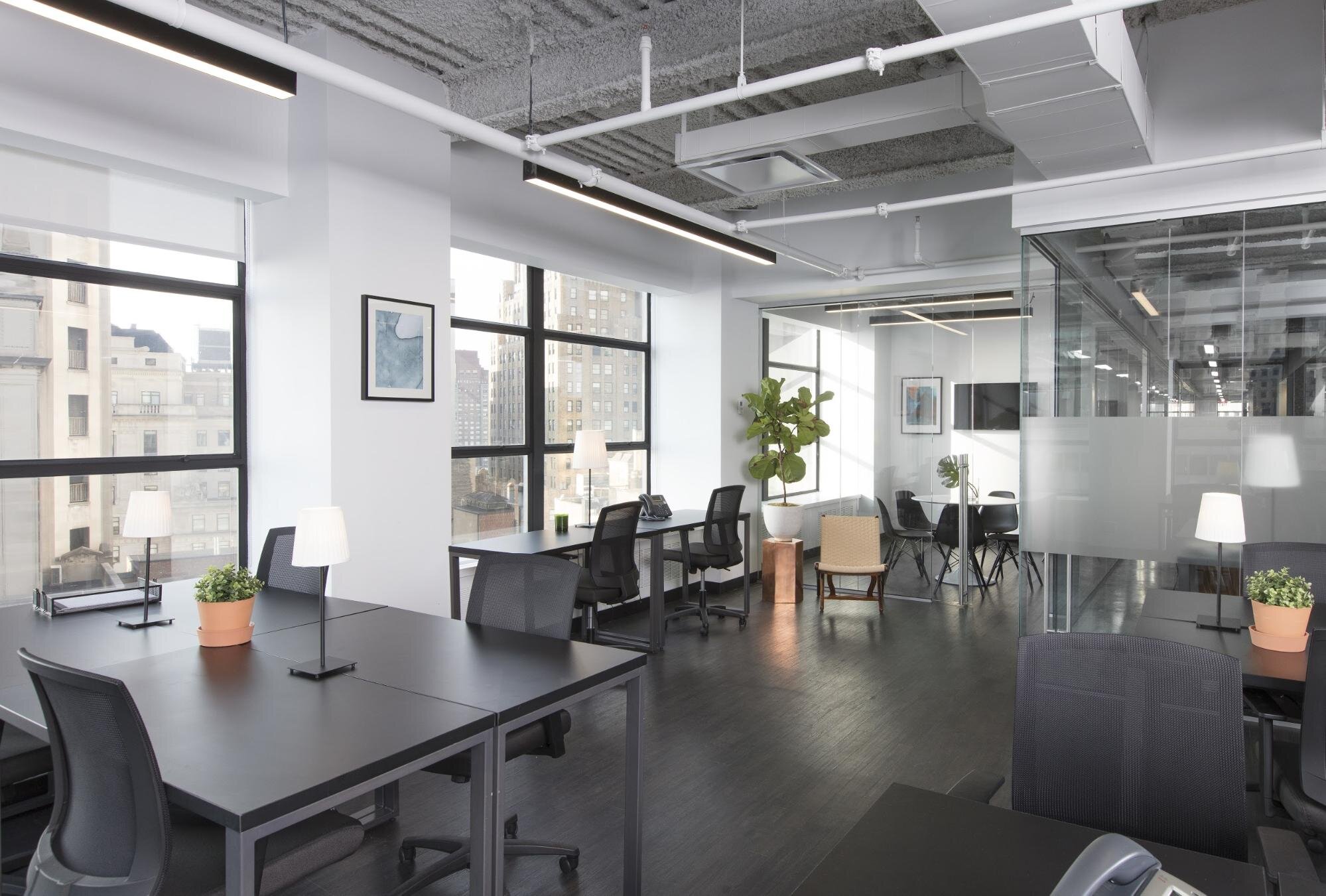
And while you’re at it, schedule a tour to experience first-hand how the boutique office environments at Bond Collective can benefit your business.

Satellite Office: The Top Things To Consider When Opening An Additional Office

bright and open industrial-style conference area

By Bond Collective Staff

As a manager, CEO, or executive, have you been wondering what is a satellite office? Is it different than a branch office? The answer to that last question is no. A satellite office and branch office are essentially the same thing under different names.

But, more to the point, what is a satellite office? What are its benefits? And what should you consider when opening one?

What Is A Satellite Office?

A satellite office is an additional location (a branch) of a larger company that is physically separate from the business’s main (or first) office. Companies large and small are choosing to establish satellite offices in different areas, different cities, different regions, or different countries.

Why would they do this, and why should you consider it as well? Because of the many benefits associated with investigating the question, “What is a satellite office?”.

What Are The Benefits Of A Satellite Office?

Efficient Customer Service

Customer service is essential to the success of your business. So establishing a satellite office where those customers are can go a long way toward building your brand in their eyes. A satellite office can also help close the gap between customers in one time zone and your customer service employees in another.

Recruitment

gentleman buttoning navy business suit in front of shared office space staircase

A satellite office can help your company gain access to an entirely new talent pool. If your main office is on the west coast, it can be difficult to get the talent you need to move all the way across the country.

With a satellite office, you can hire the right people for the job without making them travel thousands of miles to do it.

Connection To Local Customer Base

When your team members can live and work in the same area as the people who pay for your product or service, they will have firsthand knowledge of the issues that are important to those customers.

Your business will better understand the customers’ needs, desires, and lifestyle because your employees will have those same concerns. That can establish a strong connection between you and your customers and transform your business from a faceless company to a very relatable friend.

Address Recognition

perfect answer to the question what is a satellite office - quaint coworking space with large windows

A reputable address — one that customers, clients, and investors recognize — goes a long way toward improving the perception of your company.

New Markets

Another benefit of investigating the question, “What is a satellite office?” is the accessibility of new markets. Establishing a satellite office in a different region gives you the opportunity to learn more about what these potential customers need.

That can then inform your decisions about how to position your brand for maximum success.

Networking

Business is all about who you know. So why not position your business where the movers and shakers in your industry are? A satellite office gives your business access to people and resources that can influence your company’s future and change the way it operates.

But setting up a satellite office isn’t just about picking the first space that comes along. Later on in this article, we’ll discuss a number of key factors to consider when opening an additional location in another area.

Reduced Commute Time

reduced traffic with satellite offices

Commute time is a very real issue that you and your employees face on a daily basis. Long commutes can negatively affect your team’s energy levels, focus, engagement, and productivity.

Establishing a satellite office in a coworking space like Bond Collective can significantly reduce the amount of time it takes for team members to get to work. That can translate to more work done, higher motivation, less conflict in the workplace, and a happier team.

For example, a company from the West Coast set up a satellite office in the Flatiron district of New York City. As the team in this location continued to grow, they found that many of their employees were commuting from across the East River — a one-way trip that ranged from an hour to several hours depending on a variety of factors.

The company decided to establish a second satellite office on the other side of the river in Brooklyn. This drastically reduced commute times for many of its team members and put them in a better frame of mind for the hours they worked.

Collaboration

Many businesses contend with collaboration whether they manage a distributed team, some employees work from home, or everyone reports to a private office in a leased space.

When team members work in a bubble like this with limited perspectives, creativity can take a hit and your business can stagnate.

Opening a satellite office in a coworking space allows your team to collaborate with people from other industries, backgrounds, skill sets, and cultures.

Even if it’s just a quick conversation at the coffee machine, this type of collaboration can be invaluable for stimulating the imagination, innovation, and vision of your employees.

This inspiration will then trickle back from the satellite office to your main office through teamwork, interactions, and discussions.

Top 7 Things To Consider When Opening A Satellite Office

1) Location, Location, Location

New York City skyline on a sunny day

The three most important factors in real estate (and satellite office expansion) are location, location, location. Is your office close to public transportation, restaurants, and other necessities? Is it easy to get to? What does the neighborhood around your satellite office look like?

Neighborhood may not seem like a critical factor, but it can play a crucial role in the success of your new location. Be sure to consider all the variables about location when choosing where to establish a satellite office.

One of the many benefits of positioning your satellite office at Bond Collective is the reputable and impressive locations of our properties in New York City, Brooklyn, and Philadelphia.

2) Cost

Many businesses looking to open a satellite office find the perfect space but fail to factor in the occupancy costs. This is what you pay (in addition to your rent or mortgage) for the infrastructure that makes work possible.

Before committing to a satellite office space, consider how much it will cost to run vital services, such as:

  • Water

  • Gas

  • Electric

  • Internet

  • Heating

  • Cooling

  • Cleaning

  • Maintenance

  • Repairs

Unlike a satellite office in a standalone building, at Bond Collective, all the costs mentioned above are included in one low monthly fee.

3) Infrastructure

light-colored  wooden desk with computers and other office electronics

We mentioned the importance of infrastructure costs in section two, but let’s talk about those services specifically. Getting the infrastructure you need in your satellite office can be a time-consuming and difficult task.

There’s not one company you call to get everything turned on or installed. Be sure to consider how this will affect your employees and your team members when they’re separated from the main office on their own.

At Bond Collective, you don’t have to go through the time and expense of setting up the infrastructure your business needs just to be able to work. We provide all of these crucial services, including:

  • Tech support

  • Security

  • Repairs

  • Wiring

  • Internet

  • Kitchen

  • Electric

  • Office management

  • Heating

  • Cooling

  • Maintenance

  • Cleaning

A satellite office at Bond Collective is a turnkey workspace solution. Your team doesn’t have to worry about the infrastructure and who to call when the internet goes down. All they have to do is focus on making your business successful.

4) Flexibility

Opening a satellite office in another city can be a risky proposition, and the issue of flexibility quickly becomes a major concern. Will you need to dissolve the satellite office in a year or two? Will you need to expand the amount of space you use if things go well?

Locking yourself into a conventional lease can make the answers to these questions very difficult. And even the best planning can’t always provide you with an accurate estimate.

But the flexible terms at Bond Collective don’t lock you into a multi-year contract that might leave you stuck. Our terms go month by month. That preserves your flexibility, allowing your business to pivot in a different direction when necessary.

5) Accessibility

daytime freeway commuter traffic

Many businesses don’t consider accessibility an important factor when it comes to their main office or even their satellite office. But for employees faced with long commutes, access to several different transportation options can mean the difference between being late and being early.

In some markets, the only way to get to the office is by car. In larger markets, employees may have the option of taking the bus as well. In other markets, team members can walk, ride a bike, hire a cab, take the bus, or catch a train.

It all depends on where your office is located. When scouting for your next satellite office, be sure to identify locations with plenty of accessibility options.

Your employees, customers, and clients will all appreciate how easy it is to get to your location. That translates to better business all around.

6) Amenities

The ideal satellite office isn’t just about the space in which your team works. While having the right desks and chairs — along with enough room to spread out — is essential for your team’s success, the way they work is also influenced by the available amenities.

Some coworking spaces only provide one or two amenities, while others go above and beyond the industry standard in order to give your team exactly what it needs to do their best work all the time.

Look for services such as:

  • Guest reception

  • Available conference rooms

  • Mail and package service

  • Porter service

  • Bike storage

  • Free printing

Some top-tier coworking spaces also offer free refreshments such as fruit, snacks, spa water, coffee, and even craft beer to keep your team fueled and fresh when the work gets difficult.

7) Logistics Between Offices

Though your satellite office and main office may be separated by tens, hundreds, or thousands of miles, your teams will still need to work closely to make your business a success.

If your business is content with keeping in contact via virtual meeting, a solid internet connection may be all you need.

But if your two locations still need to work together in physical proximity or if you constantly need to transfer products between offices, it’s essential to pay attention to the logistics between offices when choosing your satellite location.

This goes back to accessibility, but in a way that applies to moving people and things between your two locations rather than how easy it is for your employees to get to work.

Is A Satellite Office Right For Your Business?

Employees looking out office building wondering what is a satellite office

Though there are many benefits to setting up a second location, many owners and managers still wonder, “Is a satellite office right for our business?” The answer will depend on your business’s unique goals and circumstances.

By-and-large, though, most companies that open a satellite office (or multiple satellite offices) fall into one of these three categories:

1) Businesses Growing In Size

Space is a major concern for businesses that are growing rapidly.

Nine times out of 10, those businesses don’t want to move their entire operation to a new site because they’re already in a great location and don’t see the benefit of subjecting their team to an office move.

Opening a satellite office in another part of town allows growing businesses to hold on to the benefits of their existing space. It also allows them to hire more staff to accommodate the extra work.

And when that satellite office is based in a coworking space like Bond Collective, management doesn’t have to worry about outfitting and maintaining a brand new private space — all of that is done for them.

Or, if your business has completely outgrown its existing space and is planning on moving to a new office, a satellite office in a coworking space can provide a stable and consistent place for your team to work while the move is in progress.

That way, you don’t disrupt the necessary work that got your business to this point in the first place.

2) Businesses Striving To Form Partnerships

business hand shake

Many businesses find that forming partnerships with other businesses can build up both organizations and set them on the road to long-term success. In many cases, though, it’s very difficult to maintain these relationships from a long way away.

Being in close physical proximity to each other makes solidifying and sustaining the partnership much easier. A satellite office is ideal in this situation.

Your business can send a small team to the new location — or hire a new team — to cultivate the partnership while your main workforce continues to grow your business in its original location.

Once the relationship is solid, your business has the flexibility to retain the satellite office, move the team back to your main office, or send them to another satellite office entirely.

Harnessing the power of the satellite office in this way gives your business the option to move teams to where they will do the most good for the company.

3) Businesses Looking For Top Talent

Finding top talent for your business can be an extremely difficult task. The right person for the job may live on the other side of the country and be reluctant to make such a big move.

Yes, they could work from home, but your business might lose the benefits of collaboration and teamwork that come from working face-to-face.

In these cases, it’s actually easier to set up a satellite office in a coworking space like Bond Collective and nurture a new team with top talent from that area.

In fact, for just pennies on the dollar compared to maintaining your own private office, your business can establish satellite offices in major markets across the United States and tap the talent pool in that neighborhood, city, state, and even region.

Bond Collective Can Accommodate Your Satellite Office

coworking space with large conference table and leather chairs

At Bond Collective, we’ve worked with companies large and small to provide the best satellite office space in the business.

Some companies, like Ashfield Healthcare and Ample Hills Creamery, opened a satellite office within the same state as their headquarters. Other companies, like Paramount Pictures and Mozilla, traveled all the way across the country to open a satellite office at Bond Collective.

Why did they choose us for their satellite office needs? Because of our numerous prime locations within New York City and Brooklyn, our low monthly fees, our ability to accommodate any size team, our state-of-the-art infrastructure, and the option to increase or decrease their workspace footprint on a month-to-month basis.

They also chose us for our unsurpassed amenities, such as:

  • 24-hour access

  • Custom build-outs

  • Guest reception and greeting

  • Luxurious furnishings

  • Access to small and large conference rooms

  • Mail service

  • Black-and-white printing

  • Daily on-site cleaning

  • Photo & sound studio (at Gowanus location)

  • Private meeting rooms & phone booths

  • Complimentary fresh fruit

  • Complimentary beer, coffee, and tea

  • Weekly warm cookies as well as tasty treats and beverages for purchase

  • Bike storage

  • Networking events

  • Curated events

  • Rooftop lounge

  • Pet-friendly spaces

  • Office showers

Whether it’s across the state or across the country, whether it’s for a single individual or a team of several hundred, Bond Collective can get you set up in a satellite office in a matter of days instead of the months it would take to arrange a conventional lease.

Visit any one of Bond Collective’s many locations in the United States, including workspaces in New York, Pennsylvania, Washington D.C., Illinois, Tennessee, and Texas. Or call us today to find out more about setting up a satellite office.

And while you’re at it, schedule a tour to experience first-hand how the boutique work environments at Bond Collective can benefit your business.

10 Important Virtual Interview Tips For Managers

Kid in home office on zoom

By Bond Collective Staff

A big part of creating the best team for your business is conducting an effective virtual interview. This is especially true when you can’t meet with the candidate face-to-face.

Virtual interviews, however, are different enough from regular interviews that many managers wonder how to go about directing them for best effect.

In this article, the experts at Bond Collective discuss the best tips for running your own successful virtual interview and finding the best hires for your team and your business.

Tips For Running The Best Virtual Interview

Zoom call of a virtual interview

1) Test Your Tech

Before you conduct a virtual interview, test the technology you’re going to use so you know it backward and forward. The easiest way to do this is to run a mock interview where you’re both interviewer and interviewee.

Start a meeting on your laptop or desktop and then connect to that meeting using your phone or other mobile device.

Run through the virtual interview process from both sides and make note of settings you want to change, where features and commands are located, how to get to those features and commands quickly (keyboard shortcuts), as well as the framing of your camera.

When you test your technology thoroughly as both the interviewer and interviewee, you’ll be better prepared to conduct a smooth virtual interview and to troubleshoot should something go wrong.

2) Eliminate Distractions

Few things destroy the effectiveness of a virtual interview like on- and off-screen distractions.

To prevent interruptions that pull you and the interviewee out of the interview, prepare your environment in such a way so as to eliminate distractions.

Take the time to:

  • Close doors

  • Post “Do Not Disturb” signs

  • Turn off notifications and other sounds on your computer

  • Silence your mobile phone

  • Turn down the volume on your landline phone

If you’re conducting the virtual interview in a coworking space, position yourself with a wall at your back — Bond Collective’s private meeting booths are perfect in this situation — so someone doesn’t accidentally walk behind you.

3) Be Mindful Of What’s On Screen

Man in front of computer screen for virtual interview

A key part of eliminating distractions and preserving the professionalism of your virtual meeting is being mindful of what’s on screen.

While you’re testing your technology, take a moment to examine what the camera captures. Look at the borders of the shot and what you see in the background.

If the camera captures your desk, make sure it’s clean and tidy. If desk lamps, computer monitors, plants, or other items appear at the edges of the screen, reposition the camera or move those objects out of the way for the time being.

And, above all, make sure the area behind you is organized, clutter-free, and looks professional. In fact, the less you have in the background the better (that’s why we suggest setting up with a wall behind you).

You don’t want the interviewee spending their time trying to figure out why you have a pile of stuff on the floor and wondering why you couldn’t be bothered to put it away.

4) Exercise Professionalism

When you do most of your work from your couch, kitchen table, or home office, it’s very easy to let your professionalism slip now and then (or even more often).

During a virtual interview, however, exercise the same professionalism you would if you were meeting face-to-face with an investor to secure startup funding.

Here are just a few ways you can portray a professional image during a virtual meeting:

  • Use professional language at all times (skip the swear words)

  • Dress appropriately (professional attire, no jammies)

  • Do your hair (bedhead is a definite no-no)

  • Exercise good grooming (make sure there’s nothing in your teeth, shave if necessary, wash your face, etc.)

  • Look at the camera as much as possible

  • Smile and nod your head

  • Sit up straight

  • Pay attention to what the interviewee is saying

  • Use natural hand gestures

Take the time to perfect your professional image before the virtual interview so that you always convey a good first impression to prospective team members.

5) Review The Job Description

A key part of any effective interview is knowing the job description like you know the back of your hand.

Reviewing the job description beforehand will help you confirm that it’s up-to-date and that no responsibilities have been added or subtracted.

Additionally, familiarizing yourself with the job description will help you match the perfect candidate to the duties and requirements of the position for which you’re hiring.

6) Research The Interviewee

This step in the interview process is all about getting to know the candidate from the material they’ve provided. Reread through all the application materials and make note of any questions you want to ask or points you would like them to clarify.

You can also round out your knowledge of the interviewee by researching their online profile and presence on sites such as:

  • LinkedIn

  • Facebook

  • Twitter

  • Instagram

  • Pinterest

  • YouTube

  • Reddit

  • Snapchat

  • Tumblr

A good way to use what you find on these sites is as a means of verifying the information on the application material and filling in any gaps you may notice.

7) Plan Your Virtual Interview

Facetiming and working on computer

If you don’t plan your virtual interview, it’s very easy to lose track of time. When that happens, you may spend too much time at the beginning of the interview and run out of time at the end.

That can be disastrous for the interview process, virtual or otherwise.

Before the virtual interview, plan the sections (e.g., introductions, small talk, questions, conclusion, etc.) and how long you want to spend on each.

Use the timing of each section as a guide (you don’t have to stick to it exactly) to help you stay on schedule so you can fit the necessary components of the interview into an hour or less.

8) Script Essential Questions

While you’re planning your interview, take a few minutes to script the essential questions you want to ask. Consider putting these questions at the beginning of the interview so you don’t overlook them.

9) Mention Company Culture

Whether you’re managing a remote workforce, an office team, or a combination of the two, company culture is a big part of your success.

Take the time to describe your company culture and ask prospective new hires how they might fit into that culture. Doing so ensures that you find the right person to join your team.

10) Discuss Working From Home

Another key aspect of an effective virtual interview is mentioning the work arrangements under which your business is currently operating.

Are all team members working from home right now? Will that change in the near future? Will the new hire be expected to report to a permanent, temporary, or satellite office at some point in time?

Addressing these details during the interview cuts down on a lot of confusion later on in the hiring process.

The Best Virtual Interview Starts With Bond Collective

space for virtual interview

Prospective candidates aren’t just looking at what your business does or what it makes. They’re also looking at where you work and how it reflects on the business as a whole.

Though you may be building a distributed team — and though the new-hire may be working from home for a while — they want to know that the image your business portrays is professional at all times.

The easiest way to convey such a professional image that sets the tone for everything your business does — and especially your virtual interview — is with help from Bond Collective.

At Bond Collective, we provide flexible office space to fit any size team, from one to 100 or more.

Whether you’re a digital nomad, a solopreneur, an entrepreneur running a startup, a small business, or a large corporation, we’ve got the workspace that’s perfect for you.

And because all our spaces are designed and decorated with an eye to making your business look good, you can rest easy that you’ll convey a professional image whether you’re running a virtual interview, a face-to-face interview, or a virtual meeting with investors.

Visit any one of Bond Collective’s many locations in the United States, including workspaces in New York, Pennsylvania, Washington D.C., Illinois, Tennessee, and Texas.

Or, call us today to find out more about everything we have to offer.

And while you’re at it, schedule a tour to experience first-hand how the boutique coworking environments at Bond Collective can benefit your business.

6 Office Layout Ideas To Boost Productivity

coworking space office layout

By Bond Collective Staff

It’s a fact: office layout affects the productivity of you and your team. Few things are worse for focus and engagement than a disorganized, chaotic, and noisy environment.

How, then, can you arrange your work environment to promote creativity, inspiration, and efficiency?

In this article, the design experts at Bond Collective give you office layout ideas that inspire productivity so you and your team can do the job right the first time.

Office Layout Ideas That Inspire Productivity

office layout and decor of coworking space

By Bond Collective Staff

1) Add Green To Your Workspace

One of the easiest ways to improve your office layout and inspire productivity is to bring the outside in.

No, this doesn’t mean opening the windows whenever possible. It means accenting your decor with plants of all sizes, shapes, and colors.

Research shows that teams that work in sight of even a single plant are more productive than their plantless counterparts — even in the lean workspaces occupied by entrepreneurs and startups.

If you’re stuck for ideas on how to green up your office layout, try arranging a few plants on the windowsills in your office or clustering them in a drab corner of the room.

And for more suggestions on using plants to improve productivity in your work environment, take a few minutes to read these helpful articles from the Bond Collective blog:

  • 11 Low-Maintenance Plants To Transform Your Office

  • The 7 Best Office Plants To Enhance Any Workspace

2) Light Up Your Office Layout

Natural light in your office is always best, but it’s often impossible to arrange things so that everyone is close to a window.

Instead of falling back on the harsh blue light of compact fluorescents, furnish your work areas with lights that give off the softer red, orange, and yellow wavelengths.

You can even implement lights that change automatically to mimic the transition from the morning blues and greens to the afternoon reds and yellows.

If outfitting your entire office with more natural light is not practically or financially feasible, try adding an adjustable-wavelength lamp to each workstation as a supplement to your current lighting.

Need more information on lighting for your office layout? Check out these articles:

  • Office Lighting: Everything You Need To Know For Your Office Space

  • 9 Office Design Tips From The Design Team At Bond Collective

3) Work Standing Up

Man standing while working in office space

While seated workstations are the norm in most every office layout, these aren’t always the best options for long hours of focus and efficiency.

Give your team’s productivity a boost by incorporating standing workstations at various places around the office or replacing static desks with adjustable-height desks wherever possible.

Doing so gives your team members the ability to switch from seated to standing whenever their body demands it and helps them avoid the negative health impacts of sitting for prolonged periods of time day in and day out.

Provide a variety of different work positions in your office — including standing up — and your team will be happier, healthier, and more productive than ever before.

Delve deeper into the benefits of standing and adjustable-height desks with information from these articles:

  • Standing Desks: The Benefits And Risks Of Standing At Work

  • How To Organize Your Desk For Maximum Productivity

4) Place Tools Close At Hand

Few things destroy productivity like having to trek from one side of your office to the other to use the copier or retrieve needed supplies.

This may mean purchasing and maintaining multiple pieces of the same equipment, but consider it an investment in your team’s productivity rather than a higher-than-normal expense.

When the necessary tools are close at hand, your team can shave minutes off the time it takes to do regular and repetitive actions like make copies, retrieve print jobs, and send faxes.

The time saved, at first, may not seem like it would increase productivity, but make note of all the instances your team performs these activities throughout the workday and you’ll see that the savings really add up.

For example, in a poorly arranged office layout, making copies takes five minutes because the machine is on the other side of the room. If team members make 200 copies while at work, that’s more than 15 minutes of lost productivity every day.

During a regular five-day workweek, that’s 1.25 hours during which your team could be focused on the current project.

On the other hand, in a well-arranged office layout, that same task (making copies) takes two minutes because one of the machines is only a few steps away. In this arrangement, team members lose just six minutes of productivity every day and only 30 minutes per week.

That’s a significant savings that can have a serious impact on the way you do business. And it all comes down to proper office layout.

Get more advice and guidance on this topic by taking a few minutes to read these articles:

  • Open Office Floor Plan: 6 Pros And 6 Cons To Consider

  • How To Work From Home Without Hindering Productivity

5) Focus On Accessibility

In small offices, easy access to all parts of the room isn’t usually a problem. In large, open offices, however, trying to get from point A to point B can be like running an obstacle course.

When setting up your workspace, it helps to visualize your office by the primary activity conducted in a given area.

If the primary work area is in the southeast corner and the restrooms are in the southwest corner but they’re separated by a wall, a conference room, and several private offices, your team members will have to walk up, over, and down rather than heading straight there.

That’s not an efficient office layout.

It’s not always possible in some buildings, but do your best to make all parts of the work area easily accessible no matter where you’re coming from or going.

Don’t let the complex task of designing your team’s work area get the better of you. Check out these informative articles:

  • Office Design: How To Design An Office The Whole Team Will Love

  • 11 Tips For A Happy And Productive Office Environment

6) Arrange Desks Facing A Wall

There’s much debate in the business community about the best way to arrange desks for maximum productivity.

We recommend placing desks facing a wall whenever possible. This limits distractions from activity and conversations going on within the team member’s field of vision.

Granted, it’s not always possible to arrange all of the desks this way, but even positioning a few workstations this way can improve your office layout and your team’s productivity.

For more on arranging your work area — at home or in an office environment — check out these informative articles from our blog:

  • Working Environment: What Teams And Solopreneurs Need To Be Successful

  • Home Office Ideas And Tips For An Inspired Workspace

Customize Your Office Layout For More Productivity

Customized office business cards

Everything we do at Bond Collective is geared toward boosting the productivity of the members who work there.

We design all of our coworking spaces with your professional image in mind. That means multipurpose work areas, vivid colors, natural lighting, comfortable furniture, and much more. All so your team won’t be distracted by their surroundings and lose focus.

You can even customize your office layout for even more productivity. At Bond Collective, you can change the space your team occupies from one month to the next.

That means you can be working at a hot desk in September, move to a private office (or a private suite of offices) in October, and then switch to a dedicated desk in November.

It all depends on what your team needs to stay productive in a rapidly changing business environment.

Bond Collective even goes above and beyond the norm for coworking spaces by offering industry-leading amenities, such as:

  • Lightning-fast WiFi

  • Photo and sound studio (Gowanus only)

  • Guest reception and greeting

  • Regular on-site cleaning

  • Mail service

  • Complimentary beer, coffee, tea, water, and fresh fruit

  • Other food and beverages for sale

  • Office showers with towel service

  • Bike storage

  • Rooftop lounge area

  • Mothers’ rooms

  • Pet-friendly environments

  • Curated and networking events

Whether you’re a team of one, a traveling freelancer, a startup, or a team of 100 or more, Bond Collective can help you maximize productivity, avoid distractions, and take your business to the next level.

Visit any one of Bond Collective’s many locations in the United States, including workspaces in New York, Pennsylvania, Washington D.C., Illinois, Tennessee, and Texas. Or call us today to find out more about everything we have to offer.

And while you’re at it, schedule a tour to experience first-hand how the boutique work environments at Bond Collective can benefit your business.

14 Ways Office Sharing Differs From Coworking

Kitchen area in a Bond Collective coworking space

By Bond Collective Staff

Office sharing vs. coworking has become a hot topic in recent years as everyone from solopreneurs to large-scale enterprises is discovering the many benefits of these flexible work options. But with those benefits come many questions, such as:

  • What is office sharing?

  • What is coworking?

  • How do the two differ?

  • Which one is right for your business?

In this article, the experts at Bond Collective demystify the world of office sharing vs. coworking so you can find the work environment that best suits you, your team, and your company as a whole.

Office Sharing Vs. Coworking

Kitchen area and bar in a shared office space

Office sharing is not a new idea — companies have been sharing workspaces for a long time — but the concept of coworking in the U.S. has only been around since 2005.

Confusion often arises because the two terms are similar in meaning. On one side of the issue, the industry that offers these work options hasn’t set a standard definition for either. On the other side, the English language hasn’t developed in the last 15 years to delineate office sharing vs. coworking (although things are changing in both regards).

And with the emergence of large work environments that offer both office sharing and coworking options (Bond Collective, for example), the confusion continues to escalate.

As experts in the field, we understand the differences between office sharing and coworking. In the next few sections, we’ll shine a light on the murky issue and help dispel the confusion so you can make the best choice for your business.

What Is Office Sharing?

The formal definition of office sharing is:

An arrangement wherein a company that owns or manages a large space rents redundant offices to smaller companies.

For example, imagine that Xerox leases a large space but only uses two-thirds of that space. They might sublease the other one third to a real estate company or an architectural firm — thus, they share the offices with another business.

Xerox makes some money on unused assets, while the other company gains access to a professional workspace they wouldn’t otherwise be able to afford.

What Is Coworking?

The formal definition of coworking is:

The use of an office or other work environment by people who are self-employed or working for different businesses, typically so as to share equipment, ideas, and knowledge.

In a coworking environment, you might find a digital nomad working at the same large table as one or two members of a stealth mode startup, a lifestyle entrepreneur, and a freelance journalist.

Additionally, the concept of coworking extends beyond the physical space where diverse individuals and teams gather into the realm of shared community based on mutual trust, common core values, and the synergy that comes from working alongside other like-minded men and women.

Can Office Sharing And Coworking Exist Together?

Reception area of a coworking space

The interesting thing about office sharing vs. coworking — and one of the factors that contribute to the confusion that surrounds it all — is that the two work arrangements can exist together in the same space.

Imagine a large office from the 1980s and 90s with cubicles in the center surrounded by smaller separate offices (or suites of offices) on the periphery.

Now remove the cubicle walls so all that’s left are large tables where everyone works side by side. This “open cubicle space” is coworking. Entrepreneurs, freelancers, and teams from a wide variety of businesses work, network, and share resources in a communal environment.

The separate offices on the periphery, then, fall into the office-sharing category. Businesses can rent one or more smaller offices (with doors, walls, and privacy) for their dedicated use.

Typically, these multifaceted workspaces are run by a third-party company that maintains both the shared offices and the coworking space, like the coworking space in DC.

So Xerox, the real estate company, and the architectural firm mentioned in the office sharing section above might rent private offices from the third-party company. At the same time, the individuals and small teams mentioned in the coworking section above might pay for a first-come-first-served space in the middle of the room.

Because of that unique arrangement, office sharing vs. coworking can exist in the same space. However, in the next section, we will return to the idea of a shared office separate from a coworking space so you can fully understand the differences.

14 Ways Office Sharing Differs From Coworking

Open office layout with private desks and collaboration areas

1) Privacy

One of the main differences between office sharing vs. coworking is privacy. With an office-sharing situation, you’ll have walls and a door between you and the other people in the space. 

With a coworking situation, you’ll have access to private meeting rooms and phone booths, but you’ll spend the majority of your time in the communal space surrounded by others.

2) Price

Office sharing is more expensive than coworking. You are primarily paying for the privacy and the dedicated space inherent in renting a separate office. You’re also paying for the consistency of having the same space day after day.

With coworking, you may work on one side of the room on Monday and the complete opposite side of the room on Tuesday. It all depends on who else is working that day and what time you arrive.

3) Terms

In a typical office-sharing arrangement (like subleasing space from Xerox), you might have to sign a long-term agreement. But with coworking, terms seldom go beyond three months. Some even allow you to rent on a month-by-month basis.

4) Furniture

If you owned the real estate company that is subleasing office space from Xerox, you would likely need to provide all of your own furniture — desks, chairs, printers, servers, and other vital equipment.

In a coworking arrangement, everything is provided for you. Bring your laptop and whatever else you need for the day, find a place to sit, access the on-site WiFi and printers, and you’ve got all the tools you need to be productive.

5) Infrastructure

Sharing an office with another business means that you will need to consider infrastructure. Arranging for, maintaining, and paying for utilities — like gas, electricity, water, and internet — can consume much of your valuable time and capital.

But in a coworking space, all of that is included in your rent and taken care of by someone else. You don’t have to worry about repairs or maintenance.

6) Overhead

If you choose to share an office, you’ll be responsible for the overhead that keeps your business running. You’ll have to budget for services like IT support, decorating, repairs, maintenance, and cleaning. This can put a serious dent in your working capital.

If you choose to rent from a coworking space, those expenses are included in your cost, meaning your overhead basically drops to zero.

7) Flexibility

A unique and beneficial difference between office sharing vs. coworking is flexibility.

In a typical office-sharing lease, you will pay for the space whether you use it all or not. If you suddenly downsize your business from three offices to two, you’ll still be expected to pay for the third office even though it’s empty.

In a coworking space like those at Bond Collective, you can expand or contract your workspace from one month to the next based on your company’s needs.

8) Exposure To New Ideas

For many businesses, new ideas are the lifeblood of their success. But these ideas don’t occur in a vacuum. It takes exposure to new environments, new people, and new problems to get the creative juices flowing.

When it comes to new ideas and office sharing vs. coworking, the latter option can’t be beat.

In an office-sharing environment, your team is usually exposed to just one other business (the one from whom you lease or rent the space). That minimizes your exposure to new ideas.

On the other hand, a collaborative workspace puts you in direct contact with individuals and teams from a wide variety of industries, niches, and specialties. That maximizes your exposure to new ideas.

In fact, access to new ideas is one of the biggest benefits of a coworking space.

Working alongside and getting to know people from a wide variety of backgrounds, as well as tapping into their knowledge and creativity, allows you to absorb new ideas that you might not get from your office-sharing mates.

9) Networking

workers enjoying a break together at co-working space

Networking is all about growing your professional connections to help your business succeed. With a healthy network of clients and industry professionals on your side, your business will thrive.

With an office-sharing arrangement, your team’s networking options are restricted significantly. Yes, your team will interact with the other business’s team now and then, but that’s pretty much it.

Plus, because you’re sharing office space with a business in a similar industry, you won’t be networking to your advantage (e.g., by getting other industries’ perspectives and solutions).

A coworking space, on the other hand, makes it possible to network with professionals outside your niche while you work. This gives you exposure to people, processes, ideas, and solutions you never thought possible.

You can’t get that from an office-sharing arrangement.

When you base your business, your team, or just yourself in a coworking space, you combine networking and working into a single, business-boosting activity.

10) Opportunities To Hire And Get Hired

The perfect team member or the perfect client doesn’t just show up on your doorstep one morning. You have to put in the time and effort to bring them your way. That can be a difficult and tedious job.

It’s not made any easier if you base your business in its own private space or in an office-sharing environment. You can’t hire an employee away from the other business because that would cause significant conflict.

Similarly, because your team only interacts with the other business in your office-sharing arrangement, your opportunities to get hired are extremely limited.

For both hiring and getting hired, you have to go out and beat the pavement to find the right fit. A coworking space, however, is a ready-made talent pool just waiting for you to dip your toes in the water.

By networking and socializing with other like-minded individuals, you can get a feel for professionals from a wide variety of industries and skill-levels and how they might fit into your business.

It’s very much like an extended interview during which you can really get to know the other person. Then, when you’re ready to hire, simply ask them if they’d like to join your team.

The same is true for getting hired. Think of the networking and socializing you do in a coworking environment as a way to make yourself, your team, and your business attractive to others.

That exposure may lead to more work for your business. And it’s all right there waiting for you — no pavement beating necessary.

11) Amenities

The amenities of an office-sharing arrangement are fairly limited. You might arrange for a catered lunch once in a while or an after-work happy hour every few months, but the main purpose for being there is the space to work.

Coworking spaces are more than just places to work. They also provide amenities that make it easier for your team to focus and get things done.

Services such as streamlined billing, online conference room and facilities booking, access to multiple locations (in your own city or across the country), onsite cleaning and maintenance, and even unlimited black-and-white printing give you and your team the freedom to work whenever and however you deem necessary.

You can certainly enjoy those same amenities in an office-sharing arrangement, but you’ll have to put in the work to set them up and maintain them. In a coworking space, it’s all done for you.

12) Association

discussing office sharing vs. coworking

When it comes to choosing office sharing vs. coworking, association is an important factor to consider.

Just like networking and exposure to new ideas, association done right can take your business to places you never thought possible.

As we’ve mentioned, though, restricting yourself to an office-sharing arrangement with one other business puts a damper on the activities that can take your business to the next level.

In a coworking environment, you work alongside and associate with a group of like-minded professionals from businesses large and small. That association fosters a very real sense of community — a feeling that you’re all in it together — that can have a profound influence on the way you, your team, and your business operate.

13) Agility

Agility is all about being ready for whatever your business, your industry, and the world at large throws at you. Growth and decline can strike when you least expect it, so you need to be ready to react as quickly as possible.

For example, when your business is growing, you’ll need more employees — and, hence, more space — to handle the work.

On the other side of the coin, when your business starts to decline, you’ll need to streamline your team and reduce your workspace footprint in order to save money.

With an office-sharing arrangement, you’re stuck paying a set amount for a certain square footage regardless of whether you have employees to occupy it or not (almost like a lease). That’s the antithesis of agility.

A coworking space, however, makes it easy to adapt to whatever your business encounters on the road to success.

Bond Collective, for example, makes it easy to expand or contract your team’s footprint from one month to the next. You can work from dedicated desks in January and February, upgrade to private offices in March and April, and then downgrade to first-come-first-served desks in May and June.

That’s the very definition of agility and allows your business to react to both bull and bear markets.

14) Collaboration

Networking and association widen your sphere of influence and bring you within viewing distance of the spheres of influence of other businesses. Think of them as making your way to the front door of a skyscraper.

What do you do next? You walk in the door and get to work. That’s collaboration in a nutshell.

Collaboration is about working together in a mutually beneficial relationship to provide the products, services, or guidance each party needs to get ahead.

How does collaboration apply to office sharing vs. coworking? In much the same way that the other differences apply.

In an office sharing arrangement, collaboration is limited to the single business sharing your workspace. A coworking space, on the other hand, puts you side-by-side with professionals from a wide variety of business types.

This close proximity allows you to collaborate with CEOs, writers, marketing reps, graphic designers, editors, digital artists, photographers, and specialists of all sorts.

Everything You Need In One Place

Conference room in an office sharing space

At Bond Collective, we offer everything you need in one place — office sharing and coworking alike.

Whether you want a private office, a suite of offices, or just a place to set your laptop, you’ll find exactly what you’re looking for at any one of our many locations across the United States.

It doesn’t matter if you’re on your own nurturing a startup into existence or you need space for a team of 50 or more, at Bond Collective, everyone enjoys the same industry-leading amenities and expertly designed interiors, such as:

  • Conference rooms for 2 or 20+

  • Custom build-outs

  • Private meeting and phone booths

  • Guest reception and greeting

  • Professional image

  • Unlimited black-and-white printing

  • Fast, reliable WiFi and ethernet

  • Mail and package handling

  • Porter service

  • Nightly office cleaning

  • Fresh fruit, snacks, and weekly breakfast

  • Complimentary spa water, craft beer, and coffee

All of this (and so much more) makes Bond Collective a true turn-key solution to all your business needs.

Three men working at a coworking space

Visit any one of Bond Collective’s many locations in the United States, including workspaces in New York, Pennsylvania, Washington D.C., Illinois, Tennessee, and Texas. Or call us today to find out more about everything we have to offer. 

And while you’re at it, schedule a tour to experience first-hand how the boutique work environments at Bond Collective can benefit your business.

27 Productivity-Boosting Benefits Of A Collaborative Workspace

Receptionist and entrepreneur at one of Bond Collective's collaborative workspaces

By Bond Collective Staff

In the past, your business’s collaborative workspace was the conference room down the hall where your team got together to plan, strategize, and discuss current projects.

Now, however, the term “collaborative workspace” has taken on a broader definition. It has transformed from a small room in the corner of your office into a much larger shared space where like-minded entrepreneurs, teams, and digital nomads from a wide variety of industries work side by side.

This shift toward a coworking paradigm might seem like a potential distraction for you and your team, but it can actually boost productivity and improve the way you work.

In this article, we’ll discuss the productivity-boosting benefits of a collaborative workspace that a regular office can’t provide.

27 Benefits Of A Collaborative Workspace

1) Access To New Ideas

Access to new ideas is one of the biggest benefits of a collaborative workspace.

Working alongside and getting to know people from a wide variety of backgrounds, as well as tapping into their knowledge and creativity, allows you to absorb new ideas that you might not get from your industry-specific network.

These new ideas can boost your productivity by leaps and bounds.

2) Infrastructure

Taking care of the infrastructure you depend on, like electric, water, gas, internet, tech support — not to mention daily supplies — occupies a good portion of your workday. Even if you’re focused on a project, there are always minor jobs (e.g., refilling the toner and paper in the printer) that must be done before you can make any progress.

But in a collaborative workspace like Bond Collective, infrastructure is taken care of for you. You can cross those items off your to-do list and dedicate your energy to improving productivity.

3) Professional Image

Business professionals working in a collaborative space

A professional image goes a long way toward encouraging productivity in you and your team.

Working in a cubicle under harsh fluorescent lights may have once been the go-to method of the business professional, but now it’s all about open spaces and natural light. These are the design elements that will improve your professional image, impress your clients, and inspire you and your team to new levels of productivity.

4) Low Overhead

Productivity isn’t always measured by how much work you get done in a single day. Sometimes, it’s measured by how much money you can save in the process.

Coworking spaces like Bond Collective reduce the cost of overhead to almost nil. That allows you to focus your time, energy, and hard-earned capital on the more important aspects of productivity: getting more work done.

5) Networking

Shared kitchen in a collaborative workspace

Networking is all about growing your professional connections to help your business succeed. With a healthy network of clients and industry professionals on your side, your productivity will flourish.

A collaborative workspace makes it possible to network with professionals outside your niche while you work. When you base your business, your team, or just yourself in a collaborative office environment, you combine networking and working into a single, productivity-boosting task.

6) Socialization

Working in your own dedicated office, at home, or at the local coffee shop can quickly become lonely and uninspiring. When that happens, productivity decreases dramatically.

The easy socialization in a coworking space can restore your productivity and even inspire you to new insights, like the coworking space in Washington DC.

7) Flexibility

One of the many unique and beneficial aspects of a collaborative workspace is its flexibility.

You can expand and contract the space you use to fit your business needs at a moment’s notice. Doing so can help you save money and adapt to fluctuations in productivity that are inevitable in the business world.

8) Location

Location, like professional image, can have a profound effect on your team’s productivity. A cluttered, chaotic environment without restaurants, cafes, and other businesses nearby has a tendency to sap creativity and reduce productivity.

But a collaborative workspace, like those offered by Bond Collective, provides beautiful, curated environments in the heart of business districts across the country.

9) Motivation

conference room with wooden table and red chairs

Motivation is an elusive quality that can change for better or worse from day to day and week to week.

A collaborative workspace has a much more positive atmosphere when compared to a traditional office. This atmosphere — not to mention being surrounded by people who want to be there — can energize your motivation and inject new life into your productivity.

10) Comfort

Comfort may not seem like a crucial factor for the day-to-day activity of your business, but it can actually help your team stay productive while they work.

When you or your team aren’t thinking about how hard the chairs are or how you’d prefer a standing desk over a sitting desk, you can dedicate more energy to finishing tasks quickly with a maximum of creativity and inspiration.

11) Easier Hiring

Searching for the right hire is a difficult and time-consuming job. A collaborative workspace, though, is a ready-made talent pool just waiting for you to dive right in.

By networking and socializing with other like-minded individuals, you can get a feel for what they do and how they might fit into your business. It’s very much like an extended interview during which you can really get to know the other person.

Then, when you’re ready to hire, simply ask them if they’d like to join your team.

12) Work Opportunities

The same productivity-boosting benefit that was true for hiring is also true for getting hired.

Think of the networking and socializing you do in a collaborative workspace as a way to make yourself, your team, and your business attractive to others. That exposure may lead to more work for your business.

13) Fast And Easy Setup

Bar area in a shared office building

A major drawback to changing offices is the amount of time it takes to get settled in and back to full productivity mode. With a collaborative workspace, all the hard work of setting up furniture, installing technology, decorating the space, and making sure the utilities are working is done for you.

All you have to do is show up and get to work.

14) Amenities

Many collaborative workspaces are more than just places to work. They also provide amenities that make it easier to keep your productivity levels high.

Services such as streamlined billing and booking online, access to multiple locations, and even unlimited black-and-white printing give you and your team the freedom to work whenever and however you deem necessary.

15) Community

There’s nothing quite like working alongside a community of your peers to reinvigorate your productivity. That’s exactly what you get when you work in a collaborative environment like Bond Collective.

The coworking space fosters a very real sense of community — a feeling that we’re all in this together — that can have a profound influence on the way you and your team operate.

16) Sustainability

A collaborative workspace is the very idea of sustainability. Multiple businesses work in a single office, essentially combining their environmental footprint into the same space.

This is in contrast to each of those businesses occupying its own separate office and consuming the resources necessary to keep them running.

You can help protect the environment and contribute to the sustainability of the workplace by basing your team and your business in a collaborative workspace.

17) Agility

coworkers working in a collaborative workspace

Whether your business is just getting started or you’ve been at it for many years, growth and decline come in cycles and can strike when you least expect it.

In growth years, you need more employees to handle the load. In other cases, you may need to streamline your workforce so as not to hemorrhage funds that you can put to better use elsewhere.

That’s why it’s vital that your business maintains a modicum of agility. Taking advantage of collaborative workspace gives you that agility.

Bond Collective, for example, makes it easy to expand or contract your team’s footprint from one month to the next. You can work from dedicated desks in February and March; upgrade to private offices in April, May, and June; and then downgrade to first-come-first-served desks in July.

18) No Long-Term Lease

Keeping your business from being shackled by a long-term lease may not seem like a productivity-boosting benefit, but it keeps you and your team focused on the work at hand rather than whether or not you’re using your space to its full potential.

A month-to-month agreement, for example, allows you to reduce the amount of collaborative workspace you occupy when things get tight and save money for the lean times.

With a long-term lease, you are locked into a set payment that won’t change as your business does. That can be a real productivity killer when you’re trying to remain effective but all you can think about is the upcoming lease payment.

19) Protection Against Market Volatility

It’s an indisputable fact that markets go up and markets go down — often when you least expect it.

You can safeguard your business against market volatility by deploying your team in a collaborative workspace rather than a leased office of your own.

Whether it’s unused square-footage, the need for more or fewer team members, or just conserving capital for the next stage of development, collaborative workspaces can protect your business from volatile markets whenever they may come.

In a collaborative workspace like Bond Collective, your business will be more nimble. This ability to react to change — be it good or bad — in a timely manner can give you a leg-up over your competitors who are more exposed to the harsh effects of the market because their money is tied up in a long-term lease.

20) Expansion Into New Markets

For a growing business, there are few things more nerve-wracking than expanding into new geographic markets. Whether it’s a move across town or across the country, collaborative workspaces can help reduce the risk involved in setting up a new base of operations.

With Bond Collective, for example, your Texas-based business can occupy a private office in New York City while it investigates the feasibility of opening a branch in the area.

If the expansion is viable, you can increase your workspace footprint as necessary. If the expansion isn’t viable, you can return to your main headquarters no worse for wear.

You can’t do that with a long-term lease.

21) Quiet Spaces

Man working in a quiet space in collaborative workspace

Space for quiet might seem counterintuitive to boosting your team’s productivity, but many people still need time to themselves to process the ideas of the day and to really dig into the tasks they’ve been assigned.

In fact, many businesses find that setting aside 30 minutes, 60 minutes, or even 120 minutes a day for uninterrupted work (i.e., quiet time) will actually improve both employee and team productivity overall.

Bond Collective understands that there’s a time and place for socialization and teamwork as well as quiet reflection. All of our collaborative workspaces provide designated areas for both activities.

22) Cleaning & Organizing Done For You

The cleanliness and organization of your office space have a powerful effect on your team members.

Not only does a dusty, disorganized workspace send productivity spiraling down, but even if the space is tidy, you and your team may worry about who’s going to clean it next. That’s a major drain on your productivity.

At Bond Collective, we ensure that our collaborative workspaces are always clean and organized so neither you nor your team has to worry about it.

Instead, you can focus on building your business into a success.

23) Collaboration

Chances are, your team could boost its productivity with some insights from an expert in another field.

Maybe your team is struggling to come up with a viable app. Or maybe you can’t seem to figure out a way to resolve conflict amongst team members. If your business occupies its own office space, you have to go out and find someone with the skills you need to get your productivity back on track.

A collaborative workspace, on the other hand, puts you in close proximity — often side-by-side — with professionals from a wide variety of business types.

This close proximity allows you to collaborate with CEOs, marketing reps, graphic designers, editors, photographers, and specialists of all sorts.

24) Inspiration

Getting inspiration in a collaborative workspace

When your team works on one product or service hour after hour, day after day, they tend to form a tunnel vision of sorts.

It’s necessary to do this from time to time, but when they’re stuck with the same problem over and over again, their creativity, their drive, and their productivity begin to suffer.

In a collaborative workspace, there’s never any shortage of inspiration. You and your team are always surrounded by unique individuals with new and innovative ideas.

Strike up a conversation in the kitchen or the lounge with a freelance coder, writer, or entrepreneur and you’re likely to find ways of thinking that you hadn’t considered before.

25) Mindset

For fledgling businesses, first-time managers, and new teams alike, it can be difficult to take the business seriously and maintain productivity when you’re doing most of the work at your kitchen table or a corner booth at the local diner.

But when you make the switch to a collaborative workspace, you and your team members create a business mindset that you can’t generate any other way.

A business mindset means better focus, improved creativity, increased motivation, and, yes, better productivity to help you get the job done right the first time.

26) Reliability

Directing your business’s activities from your favorite cafe is fine initially, but the uncertainty associated with working from home or from public places — it’s too noisy, it’s hard to concentrate, you can’t find a seat — is counterproductive to building productivity in your team.

To really give your business the best shot at success — and maintain productivity in the process — you need reliability and stability.

A collaborative workspace provides that reliability and stability (the space you need when you need it) so that you don’t have to worry that the noise, crowds, and seating options will affect your team’s productivity.

27) Support

As an entrepreneur, business owner, or team manager, it’s all too easy to begin doubting what you are doing is right when it comes to how you run things and how you maintain productivity.

This self-doubt can cripple your efforts to make your business a success. It can be even worse if you isolate yourself by working from home or a public place. Even in a crowd, you can be by yourself.

In a collaborative workspace, though, you and your team are surrounded by fellow entrepreneurs, business owners, and teams who can provide support to help you push through your self-doubt and take your productivity to levels you’ve never experienced before.

Bond Collective Provides Even More Benefits

Bond Collective lounge area office space

If your current office space is less than ideal, your productivity will suffer. But you can recapture the focus, creativity, and high morale you need by relocating to a collaborative workspace like Bond Collective.

At Bond Collective, you can choose from a variety of temporary office space options, such as:

  • Open-plan coworking spaces

  • Dedicated desks

  • Private offices

  • Conference rooms for 5-20+ guests

And when you partner with Bond Collective, you don’t just get a beautiful space that fits all your needs and boosts your productivity. Each collaborative workspace also comes with exclusive benefits you can’t find anywhere else.

Whether you rent by the hour, the month, or the year, you’ll get:

  • 24-hour access

  • Custom build-outs

  • Comfortable furnishings

  • Access to small and large conference rooms

  • Networking events

  • Mail service

  • Daily on-site cleaning

  • Bike storage

  • Rooftop lounge area

  • Photo & sound studio (at Gowanus location)

  • Complimentary fresh fruit

  • Complimentary beer, coffee, and tea

  • Bike storage

  • Private meeting & phone booths

  • Office showers

  • Guest reception and greeting

If you’re looking for a spacious, well-appointed collaborative workspace to boost your productivity, take advantage of any one of our Bond Collective locations in the United States — including New York, Pennsylvania, Washington D.C., Illinois, Tennessee, and Texas — or call us today to find out more about everything we have to offer.

For more resources to help you manage your business or to learn more about the advantages of coworking spaces for distributed teams, digital nomads, remote workers, and businesses of all kinds, visit BondCollective.com today.

  • Previous
  • Go to page 1
  • Go to page 2
  • Go to page 3
  • Go to page 4
  • Go to page 5
  • Go to page 6
  • Interim pages omitted …
  • Go to page 12
  • Next

Call to Book a Tour

(929) 588 - 8294

Already a member?

Log in here

Company

  • About Us
  • Locations
  • Memberships
  • Amenities
  • Enterprise Solutions
  • Contact

Resources

  • Blog
  • Press
  • Careers
  • Referrals
  • Privacy Policy

Please select a location

New York

Vinegar Hill

295 Front Street

Vinegar Hill

Financial District

55 Broadway

Financial District

Bushwick

12 Park Street

Bushwick

Greenpoint

276 Greenpoint Ave

Greenpoint

Financial District

60 Broad Street

Financial District

Pennsylvania

Center City (Station House)

1617 JFK Boulevard

Center City (Station House)

Market Street

1635 Market Street

Market Street

Texas

East Austin

310 Comal Street

East Austin

Gather by Bond Collective

Focused, Private Executive Suites in Convenient, Smaller Locations—Your Workspace, Your Way

Florida

Gather 4100

4100 Hollywood Boulevard

Gather 4100